
So, you’re launching a book—congratulations! The first thing I always tell author friends is to recognize what they’ve accomplished. Sure, there’s economic value in books (though it certainly isn’t the easiest way to make a buck…), but there’s also spiritual value. You’ve done a really hard thing! You’ve spent years (years!) putting your best thinking on the page. And you’ve created something with a literal shelf life. Now, let’s get people to read it.
Today, I’m going to walk you through how I think about book launches, which is perhaps the most strategic and least “drafting-by-candlelight-at-Walden-Pond” part of being an author. Alas, if you want your book to have an impact, you have to do your part to get the word out.
When I published my debut back in 2023, I wish I had a step-by-step guide to follow, so here’s my attempt to create one for you ahead of my sophomore release (which comes out today!)
1 year before publication: Tend to your own garden
So much ink has already been spilled on how to build your author platform, so I won’t add much. But a year before your book launches, you should have at least four things set in place:
a website
a spreadsheet with a consolidated list of your contacts (both personal and professional),
a newsletter
at least one strategy for generating awareness for said newsletter
You don’t need to write weekly 3,000-word Substack essays, but at a minimum, give your community a place to sign up for updates on your book. Tend to your garden now, so that you can plant seeds and later reap what you sow.
9 months before publication: Identify your big fish
You may have heard of the Pareto principle: 80% of the results tend to come from 20 percent of the effort. Well, book publishing is more like the 95/5. Given the nature of attention and influence these days, there are a few influential people/platforms that have an outsized ability to bring awareness to your book. It’s worth identifying who those potential big fish are for you. For a business/self-help author, perhaps it’s a certain podcast. For a novel, perhaps it’s a book club. For a memoirist, perhaps it’s an influencer.
As my friend Tim Grahl likes to say, promoting a book can be boiled down to three steps: get influential people to share about the book, get fans to buy the book, and get fans to share about the book. Your big fish sit at the intersection of who is influential for the readers you hope to reach and who you might have access to. Nine months out is a good time to identify who they are and start making inroads.
6 months before publication: Start pitching long-lead media
I hate to put it in such crass marketing terms, but getting attention for your book, like so much of life, is a funnel. You might need to pitch a hundred podcast producers to get fifteen interested in reading a galley to record five episodes. It’s unlikely that Ezra Klein or Good Morning America will come knocking at your door, so you have to come up with a strategy for proactive outreach. The two channels that require the longest lead times are events and podcasts.
Events: I like to break events into two categories: existing audiences that might be interested in your book (companies, conferences, affinity groups) and book tour stops. Not everyone wants to go on a book tour (and traditional publishers are increasingly wary that the juice isn’t worth the squeeze), but I’d recommend identifying a few possible destinations for each category. Six months out is a good time to start reaching out.
Podcasts: When it comes to pitching media, podcasts, radio, newspapers, TV, and magazines all work on their own timelines. But six months out is a good time to start pitching to large, nationally syndicated shows, since you should have galleys to send out and they book out further in advance. As a journalist, I’m always asking myself four questions when I pitch:
What’s the story?
Why should people care?
Why am I the person to write it?
Why is now the time to write it?
The latter two are the ones people most often neglect.
4 months out: Set up your pre-order campaign
One word separates successful and unsuccessful pre-order campaigns: incentives. Sure, some of your loved ones will pre-order your book to support you, but the vast majority of readers will not pre-order your book unless there’s something in it for them. To create an enticing pre-order campaign, you need offers that are both compelling and urgent. The most typical pre-order offers are bonus content (a companion guide, a bonus chapter), exclusive access to the author (a live webinar/workshop), or some sort of physical tchotchke (a bookmark! a pin!).
In my opinion, pre-order campaigns are really hard to pull off well. Sure, generating a lot of pre-orders increases your chances of hitting a bestseller list as all pre-orders get lumped together with week-one sales, but most campaigns don’t move that many copies. Think about your own book purchasing behavior: How likely are you to pre-order a book that isn’t written by a friend? This isn’t to say that it’s not worth creating some pre-order incentives, just proceed with tempered expectations.
3 months out: Identify targets for excerpts and original writing
You’re officially in the splash radius of publication day. It’s time to get your name out there. One of the best ways to do so is through original writing. This is around the time you start to see authors appear on what I like to think of as the “personal essay circuit.” The types of original writing you put out will vary based on your genre, but you should look at your manuscript from the perspective of what can be easily adapted for shorter pieces. For nonfiction authors, this often means pitching op-eds. For fiction authors, you might write something about craft or adapt a part of your novel.
It’s around this time that I start thinking about the old advertising adage: a customer must hear about a product 7 times before they make a purchase. Rather than consistent drips of attention over the course of months, you want to try to concentrate as many of those impressions as possible in the period around your pub day—one concentrated splash rather than many drawn-out drips.
1 month before publication: Mise en place
Now’s the time to put everything in place for pub week. Follow up with everyone who received a galley. Create a list of supporters who will help spread the word. Pre-write the social media posts and emails you’ll send. Prime your supporters on how they can help: buy the book, leave a review on Goodreads, and share the book with a friend.
I’ve found that people genuinely want to help—especially if you make it easy—but no one will care about your book launch as much as you. Make your asks explicit. Remember, if you believe in your book—if you believe reading it is genuinely worthwhile—asking them to buy a copy isn’t about doing you a favor, it’s about adding value to their lives.
Pub week: Don’t forget to celebrate
This is where I am now—my book officially comes out today, but god knows I didn’t write this post last night. Successful book launches are part preparation, part perspiration, and part luck. As my friend Marisa told me after her book became a New York Times bestseller, book launches are not the time to be meek. They require you to be at least somewhat shameless.
If you’re anything like me (or the many other authors I’ve spoken to about this), pub week can feel both like the most important week of your life and wildly anticlimactic. My advice is to make sure you carve out some space to celebrate how far you’ve come. After all, the launch is just the beginning.
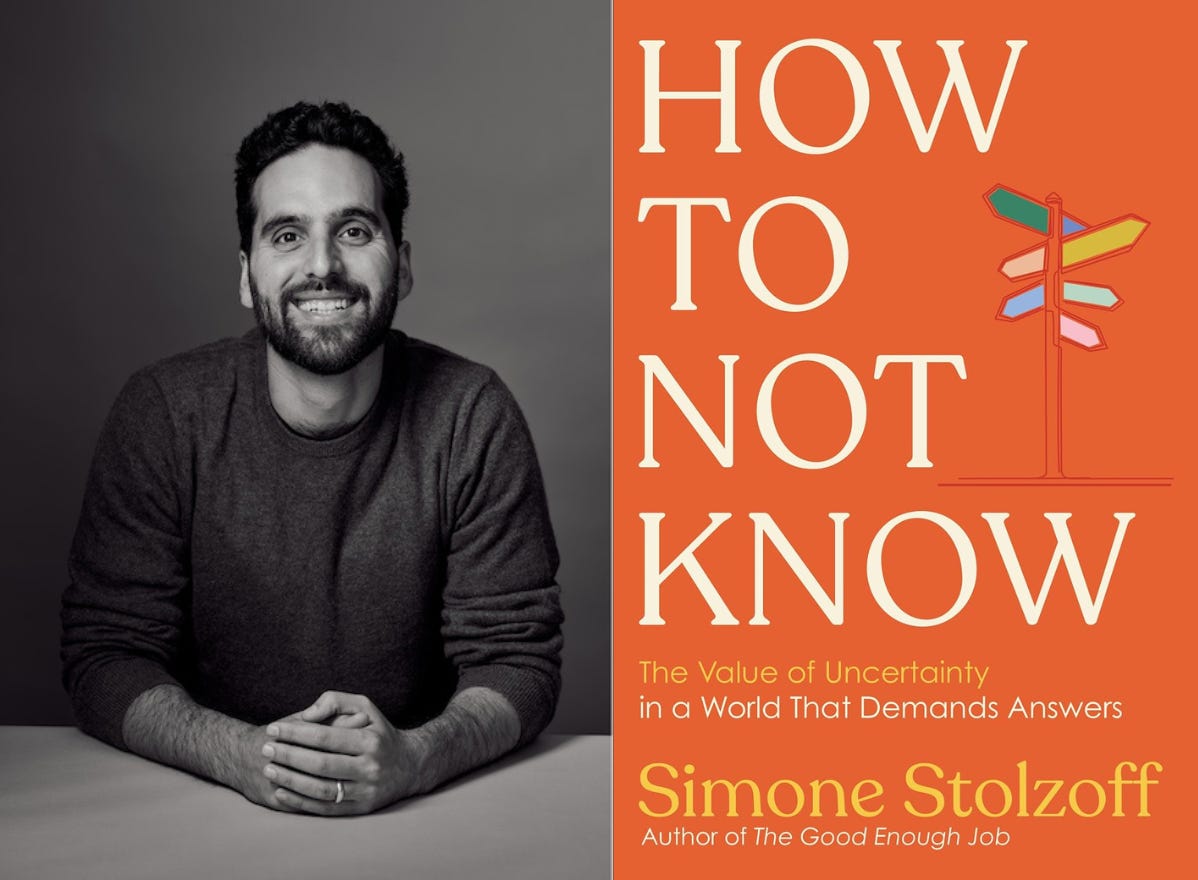
If you got value from this post, please share it with someone who’s about to launch a book. And if you want to go above and beyond, please consider ordering a copy of How To Not Know on Amazon or Bookshop.org (see, shameless!). It’s about how to get better at dealing with uncertainty, and as Lori Gottlieb says, it’s “a must-read for our time.”

So grateful to you for writing this. It's been genuinely inspiring to watch and support the last few weeks of this process.
Thank you for lending me the NBIC platform! Hope y’all check out How to Not Know :)