
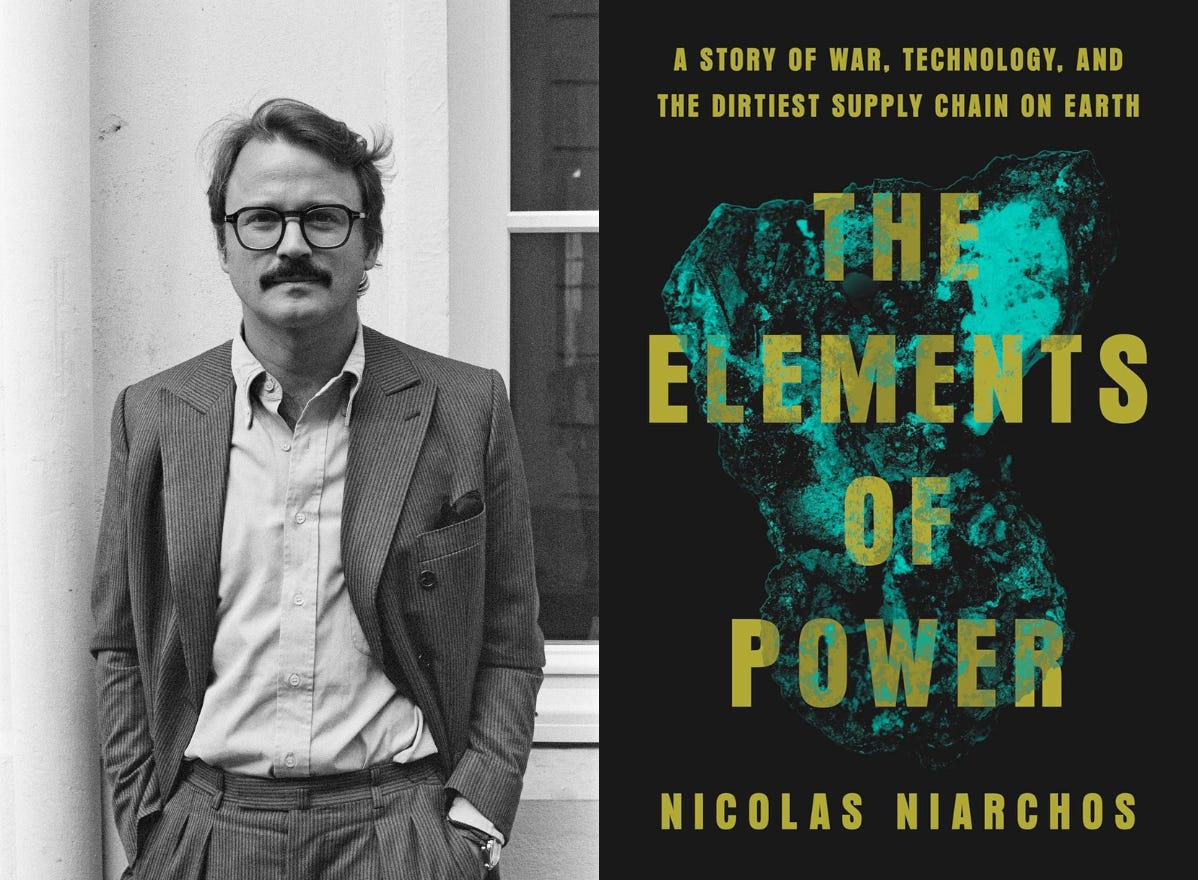
Nicolas Niarchos reports from the fault lines of the modern world—places where war, energy, migration, and geopolitics collide. A journalist for The New Yorker, The Nation, and The New York Times, he has testified before Congress on Congolese battery mining, reported from Ukraine, and won an Edward R. Murrow Award for his radio work. His new book, The Elements of Power, traces the global scramble for the minerals that fuel our phones, electric vehicles, and green-energy ambitions—and the staggering human cost embedded in the supply chain.
In this edition of 21 Questions, Niarchos talks about the translators and local reporters who make foreign correspondence possible (and sometimes go to prison alongside you), why he’s skeptical of shortcuts (including AI, which he calls “a glorified Google”), and the hustle required to survive in a feast-or-famine profession.
If you’ve ever wondered what it really takes to report from Congo, Indonesia, or Ukraine—and then turn that reporting into a book—this conversation offers a bracing look behind the byline.
21 Questions with Nicolas Niarchos
1. I couldn’t have written my last book without…
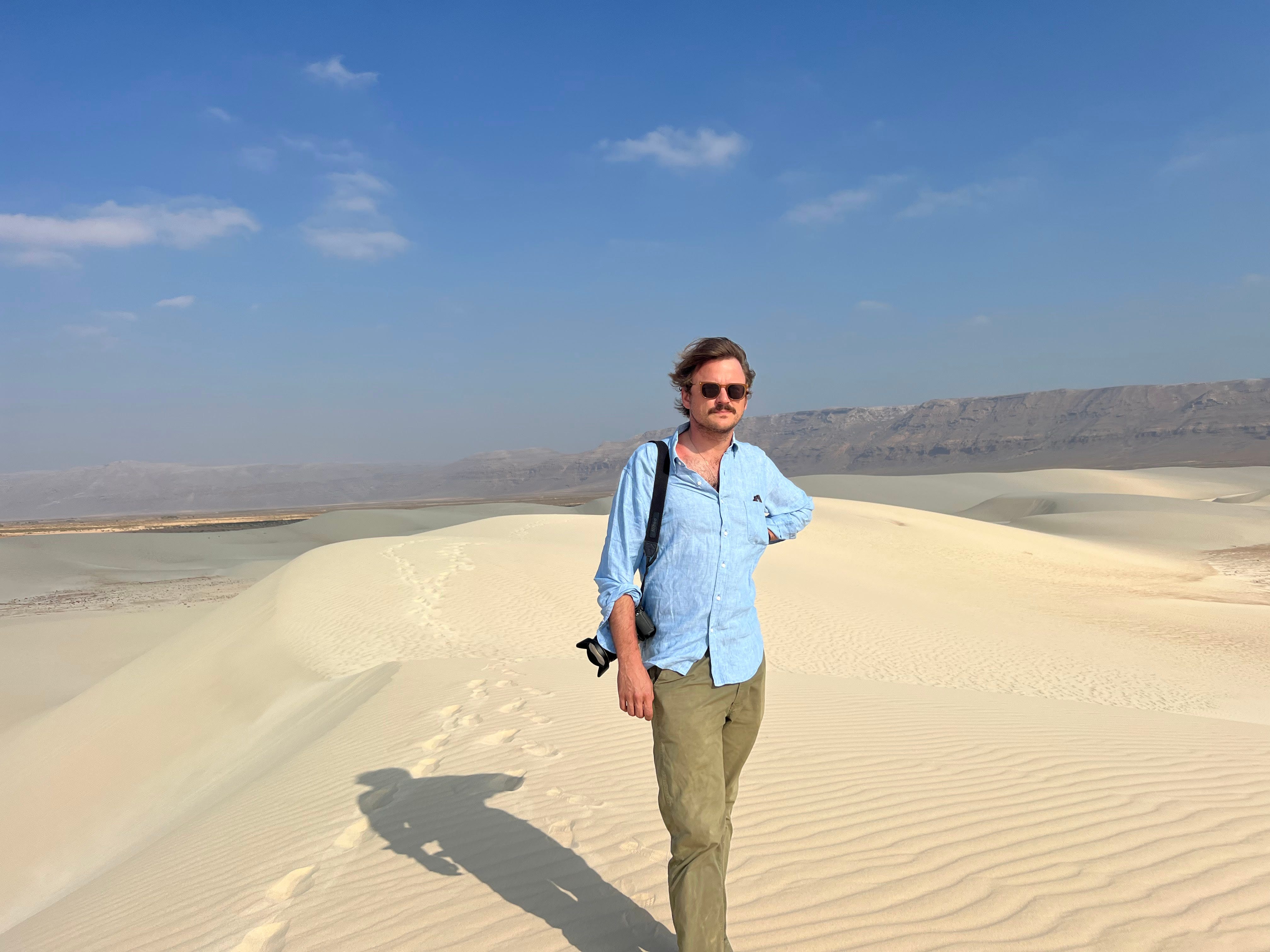
The amazing translators and local journalists who helped me along the way. The Elements of Power is an investigation into where we get the minerals that power our lives. It is a global story, but one with very local implications all over the world. In the Democratic Republic of the Congo, Jeef Kazadi Kamwanga helped me navigate tricky shoals and even went to prison with me; in Indonesia, Richald Hariandja, Upi, and Rose helped take me (and my wife!) around; in the Western Sahara, I benefited from the knowledge and wisdom of Mohammedsalem Werad.
2. What’s the thing most people get wrong about being a writer?
That it’s a life of leisure. Writing (and rewriting) takes long hours, sucks your sleep, and often takes you to complicated places—real and conceptual—that take time to excavate and understand.
3. Hemingway wrote standing up; Edith Wharton, lying down. What are your quirks?
I often write in bed or at the kitchen table, surrounded by paper. But quite frankly, I can write anywhere.
4. What income streams make up your writing business?
Writing for magazines and newspapers, reviewing, judging and reading for prizes, editing, fact-checking, speaking arrangements, teaching at festivals. Maybe I should be trading crypto?
5. Is there a book you wish you’d written?
Ulysses by James Joyce.
6. How has AI changed your writing process?
AI transcription is a Godsend.
I use ChatGPT, etc., as a sort of glorified Google: It helps me find information that is useful. But it is no substitute for research. I will also ask it complicated questions to see how it reacts; occasionally it will suggest new lines of inquiry. But again, it is no substitute for real research.
7. Where do you find new ideas?
Traveling, reading widely in different languages, speaking to as many people as possible of all levels of expertise in as wide a range of fields as possible.
8. What’s the best piece of professional advice you’ve ever received?
Be nice to the prison guards.
9. And the worst?
When people tell me not to go somewhere and phone a story in. The best writing is usually done from the ground up.

10. Whose career do you most admire and why?
The doctors of Médecins Sans Frontières and other frontline doctors. They are some of the most hard-working, noble people I have met. Their lives are not easy, they get little recognition, and they have to live under the constant threat of being attacked.
11. What’s on your nightstand right now?
The Twilight Zone by Nona Fernández, Sana’a Stories, an excellent anthology of Yemeni short tales edited by Laura Kasinof, and L’Affaire Ben Barka: La fin des secrets by Stephen Smith and Ronen Bergman.
12. Foreign rights, audio rights, film rights: which have been the most valuable to you?
Foreign rights. I have sold my book in six countries!

13. How did you find your agent?
He found me. He reached out after I published a long article on Yemen in 2017, and we have bandied around ideas ever since.
14. Coffee, tea, or something stronger?
Coffee and lots of it. Occasionally tea, with lots of honey and milk. My Monster Energy days are long behind me.
15. What’s one marketing tip you’d give a new author?
Do everything you can. You don’t know who can boost your audience.
16. What’s the best non-writing skill that’s helped your writing career?
Interviewing. Most of interviewing is being prepared with a solid background in the subject you are talking about and being good at chatting around it. But there are skills that can be learned. I took a class at graduate school on interviewing with Nick Lemann, and his expert tutelage helped hone my style.
17. How many drafts before you show your editor?
I’ll show my editor anything. Well, almost.
18. Can you describe your ideal workday?
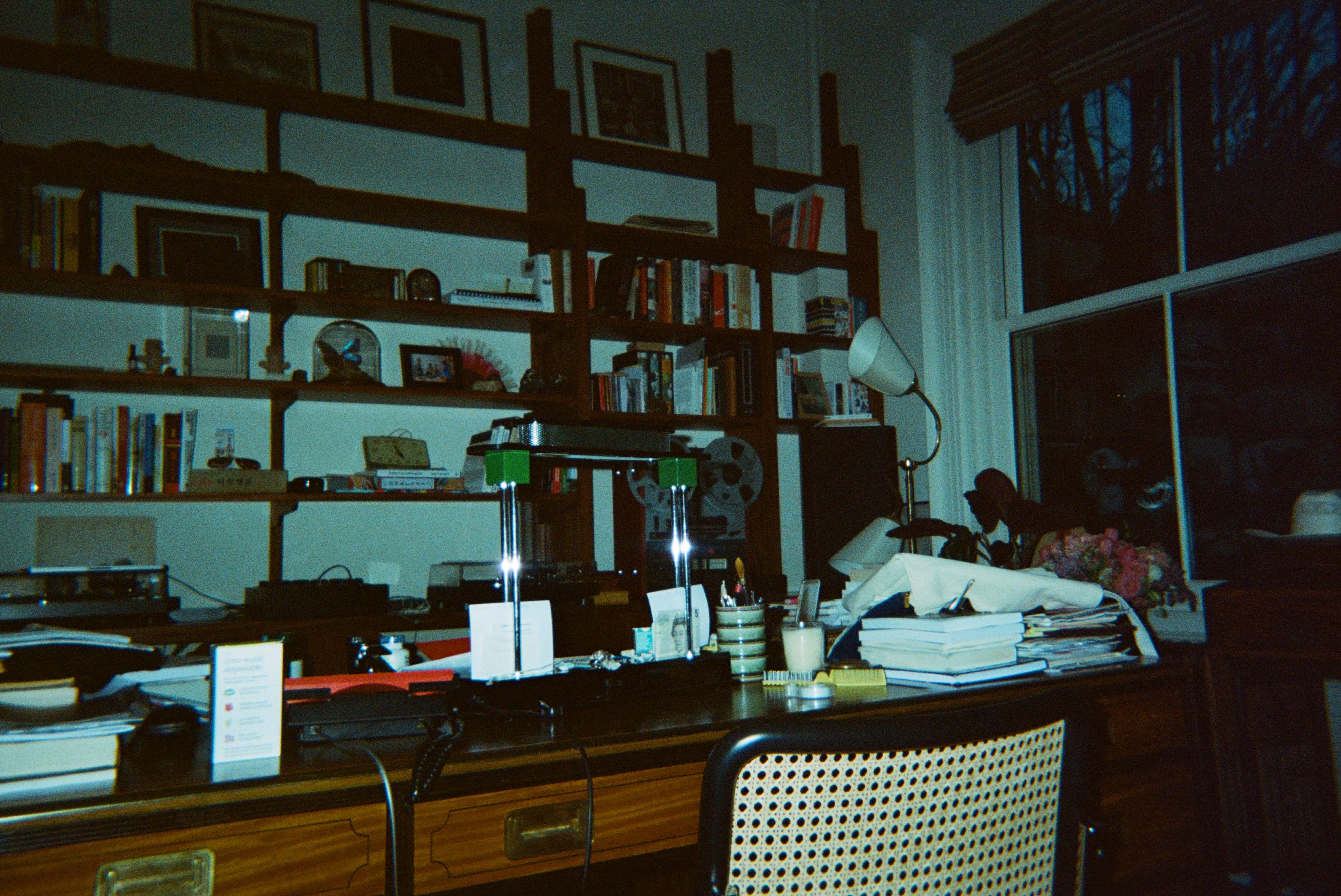
Wake up at six, go for a run, write until lunch at one, cook some lunch, research or write until around four, go for a walk with the dog, write until eight, cook dinner, walk with the dog, do an hour or two of writing before going to bed.
19. How does that compare to your actual workday?
Honestly, when I can block out time, that’s pretty much what my workday looks like. Unfortunately, I don’t often have that luxury, so I work a lot on planes, trains, in the back of taxis, and so on. I also usually have tonnes of phone calls—and then there’s the procrastination. I’m also starting a new magazine, so that eats up my days almost entirely at the moment.
20. What is your new book about?
The Elements of Power is about the race to acquire the materials that power the future. I focus on battery metals like cobalt, which are extracted at a horrendous human cost in Congo; nickel, which is mined pollutingly in Indonesia; and the Western Sahara, Africa’s last colony. I also give readers the full story of how lithium-ion batteries were created and commercialized, speaking to some of the key figures in the field.
21. Any new projects the Author Insider community can help support?
Some former colleagues and I are launching a new long-form print magazine called Now Voyager in March. It will focus on long-form storytelling. The website will soon go live at www.nowvoyagermag.com. Please use the link to subscribe and donate, if you can!
Bonus Question: Any questions or feedback you would like from authors in the community?
How do writers manage to churn out books every year? (Here’s looking at you, French writers.) I’d love to hear tips and tricks for time management, and what the publishing process looks like on that!
More from Author Insider
Author Insider is where writers get the real story of publishing—thoughtful conversations with bestselling authors and industry insiders, clear-eyed analysis of where the market is headed, and practical strategies for building a sustainable writing career. Whether you’re just starting out or several books in, the goal is the same: helping you make smarter decisions about your work.
If you’re new to Author Insider, here are a few reader favorites:
Until next time,
Panio Gianopoulos

Editorial Director, Author Insider & The Next Big Idea Club