
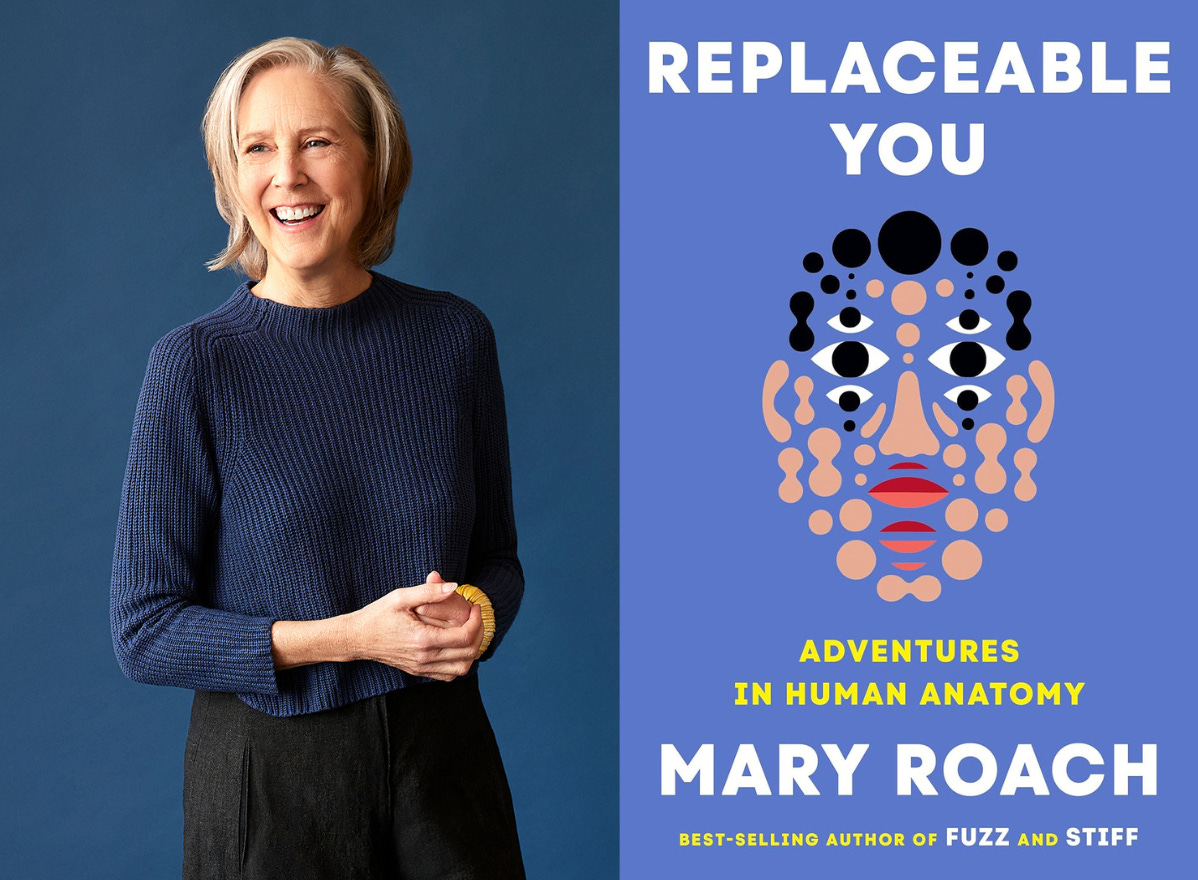
I try not to swear in my posts, but holy shit is Mary Roach funny. She’s one of a handful of authors—including David Sedaris, George Saunders, and whoever writes The Onion—who literally make me laugh out loud. (My sincere apologies if you ever sat next to me on an airplane while I was reading one of Mary’s books.)
Her writing has that effect on a lot of people. Quick personal anecdote: my wife used to read books aloud to her father, who was blind, and when she tried to read him Mary’s first book, Stiff: The Curious Lives of Human Cadavers, she laughed so hard that she couldn’t breathe. Gasping, she finally had to give up. It’s even more telling that my wife is an actress who’s professionally trained not to break (didn’t matter).
In her eight New York Times bestsellers, Mary has taken on topics as varied as bodies (alive, dead, and in between), sex, living in outer space, animal/human relationships (not that kind), and the supernatural. She’s done it boldly and scrupulously, engaging in deep reporting. But what makes her work stand out isn’t just the science; it’s her presence on the page—relentlessly curious, effortlessly funny, and remarkably un-squeamish.
Here, she answers 21 questions with the same curiosity, wit, and willingness to go wherever a question leads.
21 Questions with Mary Roach
1. I couldn’t have written my last book without…
The kindness of strangers. My chapters only work when someone agrees to let me hang around their workplace for a day or two. Universities, hospitals, biotech firms—and their public affairs gatekeepers—tend not, these days, to grant that access easily. My ability to get where I needed to go depended on people vouching for me, making introductions, and just generally being terrific human beings.
2. What’s the thing most people get wrong about being a writer?
That it’s a solitary pursuit. That we spend all day toiling alone in a garret. What even is a garret? For nonfiction writing—and much fiction as well—the research takes one out into the world. I probably interact with a hundred people in the course of researching a book, and hundreds more on book tour. Also? That we spend eight hours a day writing. Honestly, who writes for more than a couple hours at a time?
3. What’s your most common form of procrastination?
Answering fun little Q and As about writing.
4. Do you read your reviews?
About as often as I put battery acid in my coffee, and to similar effect.
5. What’s the first thing you do after you finish a draft?
Worry.
6. Kiss, marry, kill: podcasts, newsletters, and speaking gigs.
Podcasts: you mean going on other people’s or doing my own? Kiss for the former, kill for the latter
Newsletters: Kill
Speaking gigs: Kiss
7. Where do you find new ideas, and how do you keep track of them?
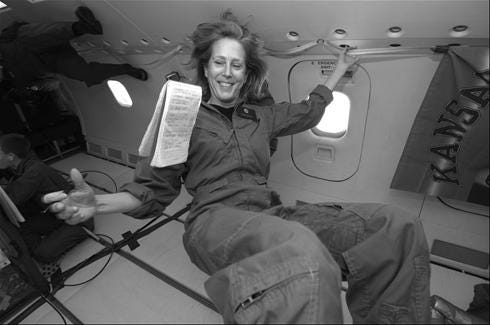
I found the idea for Stiff by wandering around the basement of the UCSF medical school library, where the out-of-date stuff goes to die. Spook grew out of a chapter in Stiff. A sentence in Film Quarterly about the “colposcopic films” of Masters and Johnson sparked the idea for Bonk. A conversation with an astronaut was the germ of Packing for Mars. Sometimes it’s an email correspondence I’ve had with a reader—an army pathologist for Grunt and an amputee for Replaceable You. So, basically, all over the place.
8. What’s something you wish you’d started doing five years ago?
Narrating my audiobooks. Not five years ago, but fifteen years ago. I’ve done the last two and wish I’d done others. It’s just easier to hit the tone—especially with humor—when it’s you who wrote the sentences.
9. What’s the best piece of professional advice you’ve ever received?
It was a fortune cookie fortune I got during my magazine feature-writing days. It said, “Try something new.”
10. And the worst?
An editor who had read my proposal for Stiff said that the book needed to have a narrative through-line. She thought I should follow the decomposition of a single body all the way through. Even to me, that sounded revolting.
11. What’s a writing rule you’ve happily broken?
A nonfiction book needs to have a narrative through-line.
12. What’s on your nightstand right now?
A lamp, a dirty glass, earplugs, and a collection of Kurt Vonnegut essays.
13. How did you find your agent?
I didn’t. My agent found me—from reading my Salon.com columns. I’d been contacted by a couple other agents, but they were putzes. One wanted me to ghostwrite a book about the history of the pomegranate. (I just looked it up. Someone took the bait! Pomegranate: A Global History. It exists!)
14. What tech tools (AI included) do you actually use—and which ones do you actively ignore?
I use Perplexity AI but always ALWAYS go to the sources it provides. I don’t use digital organizational aids like Scrivener. I work from printouts of transcripts and papers, etc. Having more than two windows open at once makes me irritable. I’m old school. Or just old.
15. What’s the best non-writing skill that’s helped your writing career
Persistence. Curiosity. Touch typing.
16. How many drafts before you show your editor?
I don’t really do first drafts. It’s more like a thousand micro-drafts, picking away at everything, over and over until I can’t stand to look at it anymore.
17. Can you describe your ideal workday?
Sitting down to write after a reporting trip that’s generated grade A material—lively scenes, amusing conversations, surprising things to describe. Writing, for me, is a joy, but only if the research has gone well.
18. If you could write one book in a totally different genre than you usually do, which would it be?
I once tried to convince my publisher to do a Mary Roach cookbook—recipes gleaned from all my books. There’s a surprising number of them: corn starch-based semen simulant (yield: one ejaculate), ballistic gelatin, human mummy confection. NASA fecal simulant (for testing zero-g toilets), edible paper, guano stew...
More realistically, I’d love to collaborate with an artist on some sort of oddball memoir in graphic novel form. Years ago, I collaborated with Arthur Jones for a chapter of his Post-It Note Diaries and enjoyed the crap out of it.
19. What’s something about the writing life that still surprises you?
That it is possible to write the books you want to write, in the way you want to write them, and make a fine living doing so. Key word: possible
20. Fill in the blank: In five years, successful authors will all be…
Panhandling
21. Any new projects the Author Insider community can help support?
Yes, give me a new book idea. Preferably one with a narrative through-line. I hear you need that for nonfiction books. And no pomegranates, please.
One of Many
Author Insider publishes conversations like this regularly, plus interviews with publishing insiders and bestselling authors, reporting on industry trends, and strategies to help establish and grow a writing career.
If you’re curious, you can check us out here.
Until next time,
Panio Gianopoulos

Editorial Director, Author Insider & The Next Big Idea Club
Want to make a living as a writer?
Author Insider is for writers who take their craft—and their careers—seriously. Get behind-the-scenes publishing insights, tactical advice, and conversations that help you stay in it for the long haul. Subscribe for free, or upgrade to paid to access our live workshops and expert interviews.