
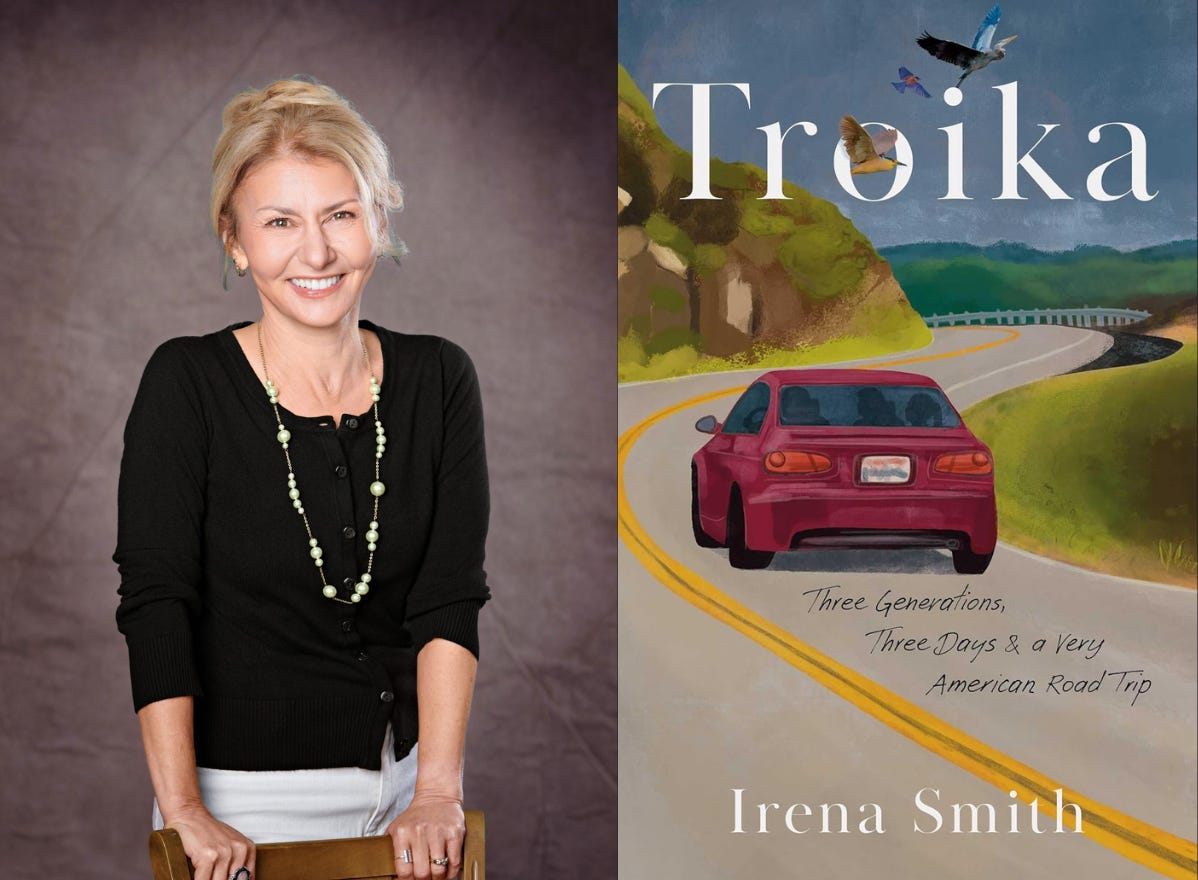
Irena Smith writes about ambition, motherhood, and memory—ideally, under the duress of a self-inflicted deadline. The author of The Golden Ticket, her sharp and tender memoir about life inside the college admissions machine, Smith has recently turned her attention to family in Troika, a three-generation road trip story that winds through California, Greek mythology, and the emotional terrain between mothers and daughters.
In this edition of 21 Questions, she talks about panic as a productivity tool, the irresistible perils of checking Substack stats, and the necessity of fountain pens.
21 Questions with Irena Smith
1. I couldn’t have written my last book without…
A fast-approaching deadline. In my world, nothing gets written unless there’s a sense of total panic and pressing urgency, usually self-created because I’ve procrastinated until the last possible moment.
2. Hemingway wrote standing up; Edith Wharton, lying down. What are your quirks?
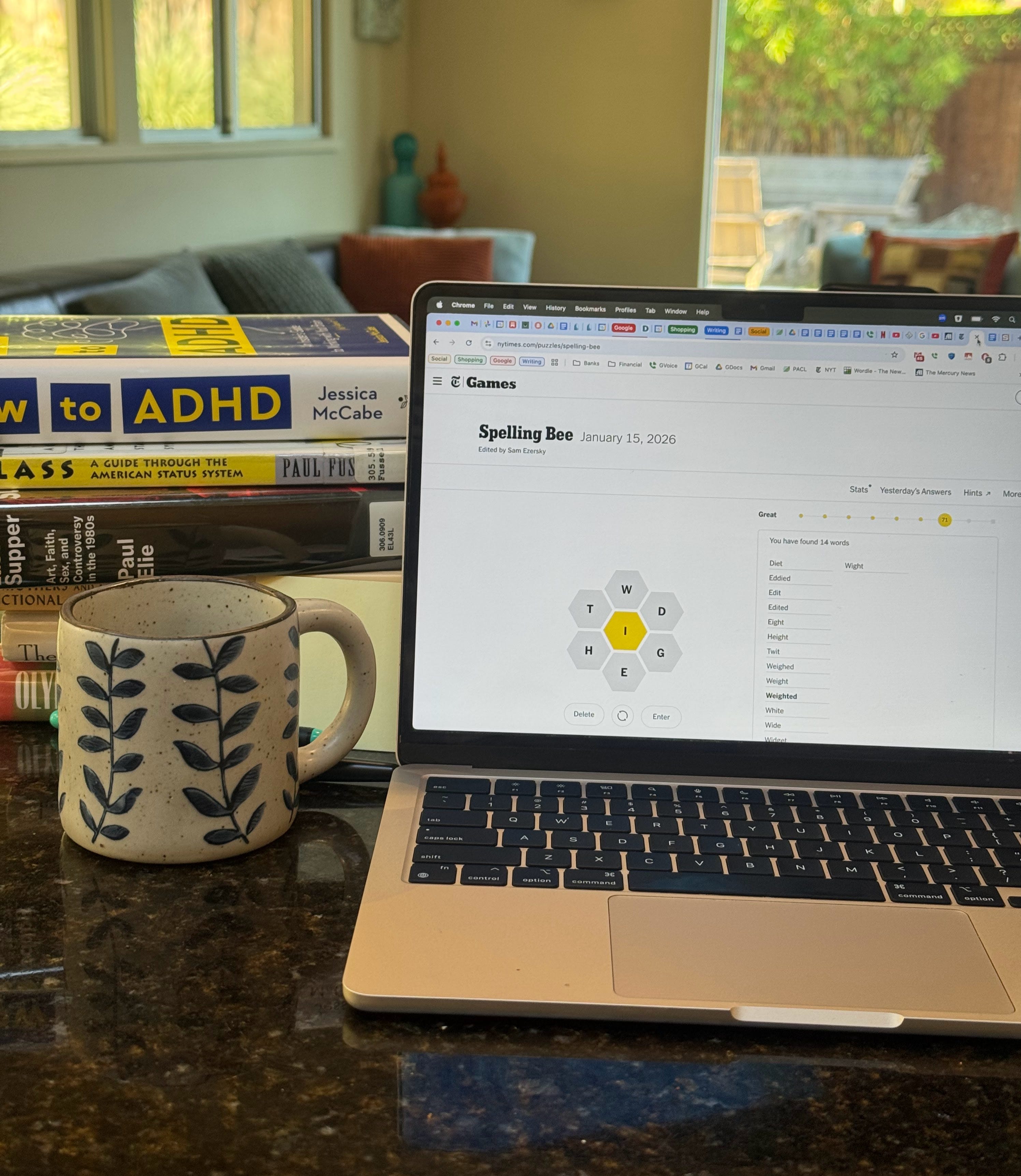
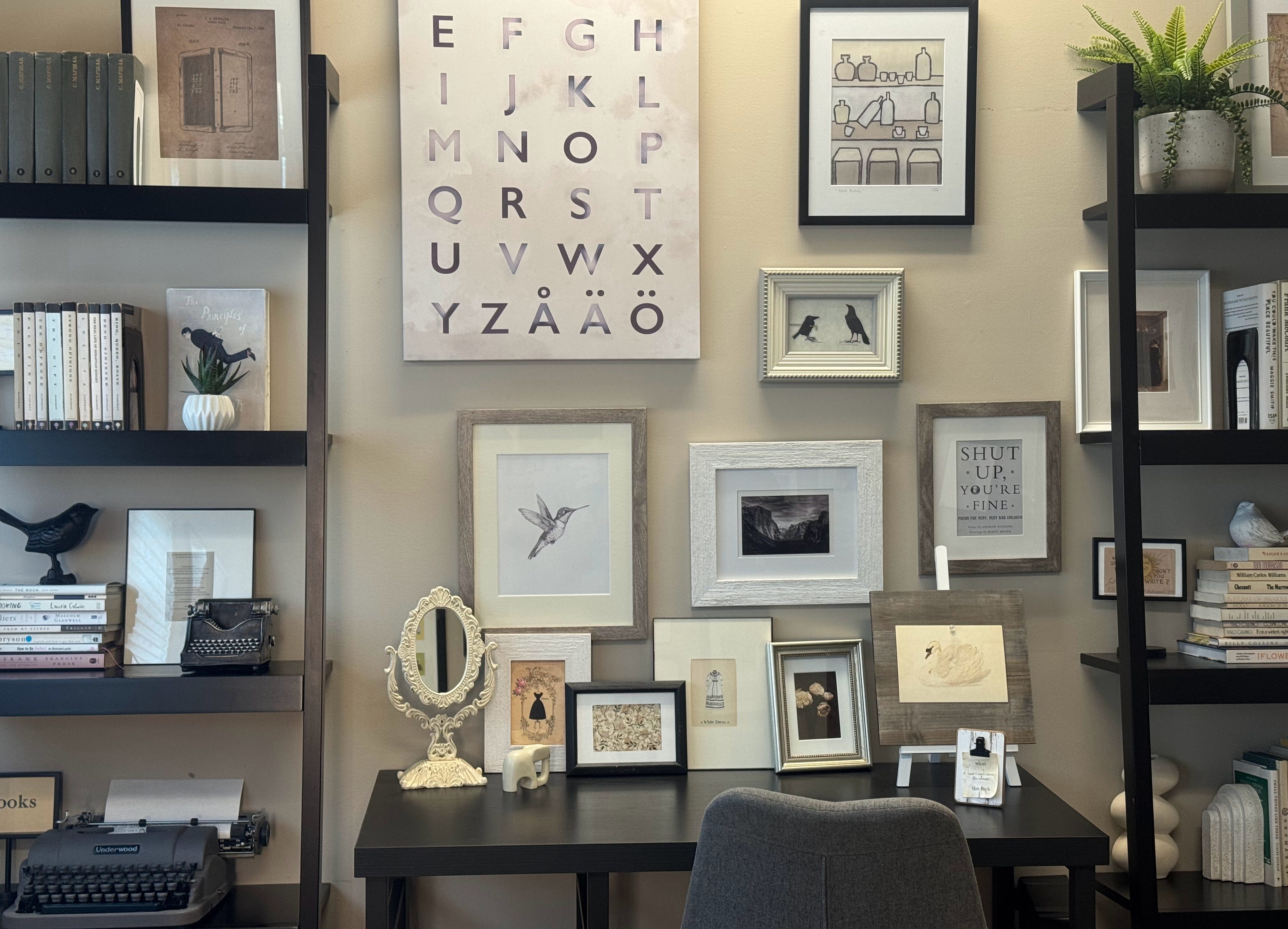
I write standing up at the breakfast bar in my kitchen. If I really have to concentrate, I’ll sit down at the dining room table or walk to a coffee shop. I have a home office with a desk which I never use.
3. Do you read your reviews?
Yes, even though everyone says not to. Then I either get really giddy or fall into a funk and start asking dark existential questions.
4. What income streams make up your writing business?
Paid subscriptions from two Substacks, royalties from my first book, and teaching writing classes. I worked as a college admissions counselor before turning to writing full-time, and the difference between what I made helping students write college essays and what I make as a writer is… vast. And not in a “good” way, at least if you like money. Yet I wouldn’t trade what I’m doing now for what I did before.
5. Kiss, marry, kill: podcasts, newsletters, and speaking gigs.
Kill: Podcasts, because I fantasize about doing one on a regular basis, but am too intimidated by the prospect of having to figure out how to get started.
Marry: Newsletters, specifically Substack, which has been my happy place from the get-go.
Kiss: speaking gigs. More people should ask me to come talk! I’m fun!
6. Is there a book you wish you’d written?
Priestdaddy. Of course, I’d also have to have been raised by a married Roman Catholic priest father, but really, I just want command of anything resembling Patricia Lockwood’s one-of-a-kind vernacular—profane, poetic, loose-limbed, unhinged in the best way—and her ability to pivot from dead serious to falling-down funny in a single sentence.
7. Have any tech tools made your job easier?
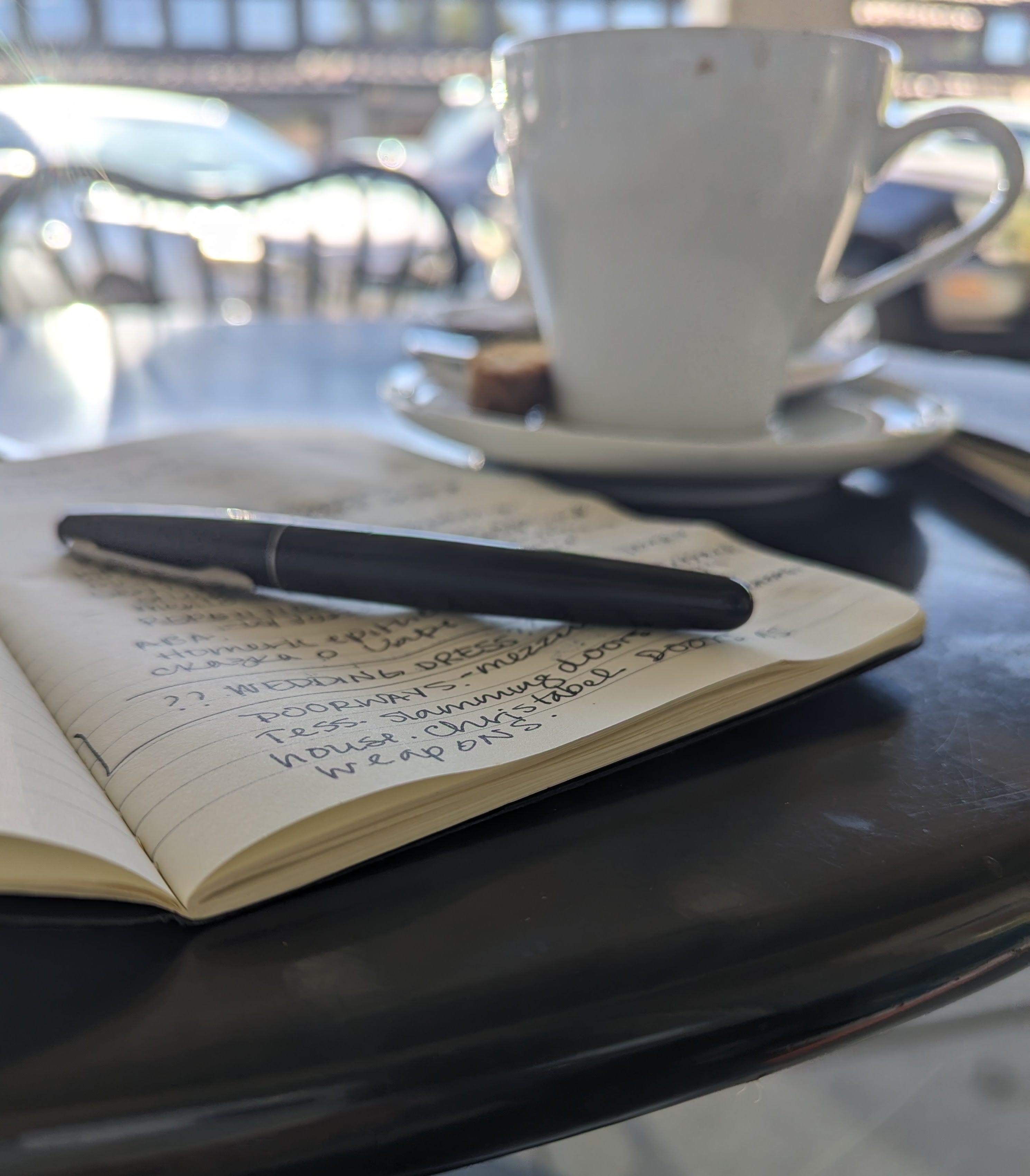
Not really. Tools like Scrivener give me anxiety, and it’s actually analog tools I’ve found the most helpful—specifically, walking to a coffee shop without listening to anything other than the thoughts in my head and then writing with a fountain pen in a Moleskine notebook. There’s a ritualistic quality to it. The notebook doesn’t have to be Moleskine, but the pen has to be a fountain pen.
8. How has AI changed your writing process?
It hasn’t. I’m too afraid of outsourcing the hair-clutching frustration of early drafts and thereby losing my voice and my soul.
9. What’s the best piece of professional advice you’ve ever received?
Write what you know.
10. And the worst?
Write every day. I know it’s gospel, and I know it works for some people, but all it does is give me indigestion and guilt.
11. Whose career do you most admire and why?
Ann Patchett. I admire her dogged dedication to writing, I adore her nonfiction (This Is the Story of a Happy Marriage is one of my favorite works of nonfiction), and I love that she has a bookstore that is a treasured community gathering place. She strikes me as a genuinely good person who didn’t let fame go to her head or affect how she lives her life.
12. What’s on your nightstand right now?
The True Story of Raja the Gullible (And His Mother), several pens, and a vintage brooch I found at a flea market and put on my nightstand to remind myself to wear it.
13. How did you find your agent?
Through a friend, at the very beginning of the pandemic. The agent asked to see my manuscript (which I panic-finished in three days before sending it to her) and offered to represent me. Sadly, her heroic efforts to find a traditional publisher culminated in 70+ rejections, and I ended up going with a hybrid publisher, so I am currently agentless.
14. Foreign rights, audio rights, film rights: which have been the most valuable to you?
Audio rights. I recorded my own audiobook two years ago and enjoyed the process tremendously. The best part was when the audio engineer told me that as the author/narrator, I could make whatever changes I wanted—meaning that if a sentence didn’t read right, I could tinker with the wording right then and there.
15. Coffee, tea, or something stronger?
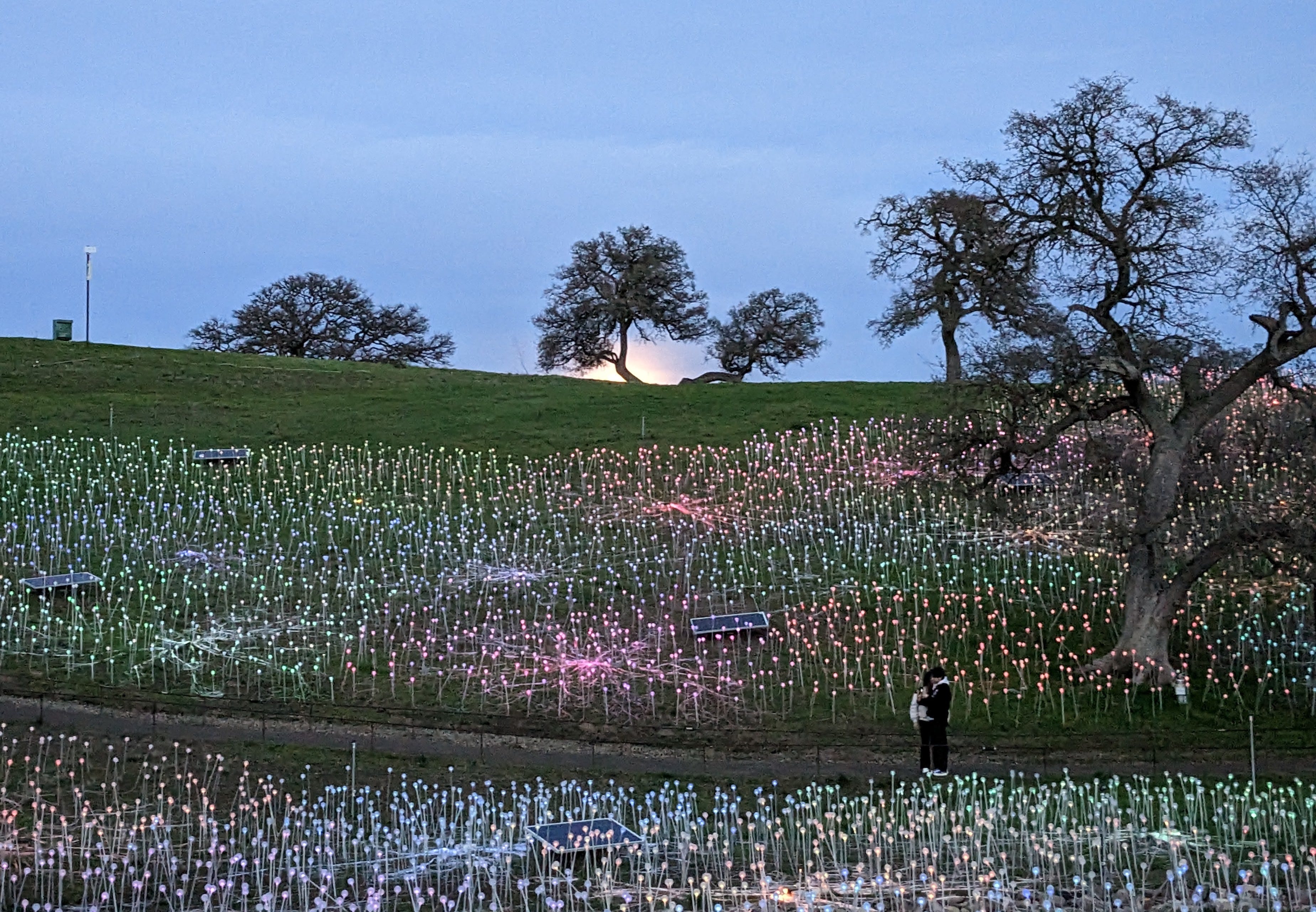
At least three cups of coffee in the morning (I can usually hold a coherent conversation after the first two), tea in the afternoon.
16. What’s the best non-writing skill that’s helped your writing career?
Pattern recognition, which helps me see the story before it announces itself. I’m good at noticing patterns—emotional, behavioral, conversational—and being able to see what repeats, what breaks, and what’s missing helps me discern structure and meaning. Once I see a pattern, writing becomes less about inventing and more about recognizing what’s already there.
17. How many drafts before you show your editor?
Anywhere between zero and five. I’m friends with my developmental editor, and she has an uncanny ability to see the potential in a handful of paragraphs, even if the idea is so faint that it’s practically invisible. She’s a great sounding board for “is this anything?” questions, and if the answer is yes, I usually retreat to my writing cave/breakfast bar, go through a handful of terrible first, second, and third drafts, and send her the slightly less terrible fourth or fifth version.
18. Can you describe your ideal workday?
I wake up at 6 am, go for a run, sit down at my desk with a cup of coffee, start and finish a Substack post, and write a chapter or two of my third book. Then I spend the afternoon and evening socializing with friends, reading, and basking in the satisfaction of a productive day.
19. How does that compare to your actual workday?
I wake up at 7:30 am, snooze my alarm twice, put a long cardigan that is definitely not a bathrobe over my pajamas, drink coffee, check my email, check my book rankings, check how many people liked my previous Substack post (not enough, never enough), go on a walk, jot down some desultory ideas for a Substack post and put off the third book until the following day. These activities are interspersed with scrolling social media, rechecking book rankings and Substack stats, reading a page or two of three different books. The day ends with guilt and consolatory chocolate.
20. Fill in the blank: In five years, successful authors will be ______
Writing books designed for people with severely fragmented attention spans.
21. What is your new book about?
Troika is about a three-day road trip to California’s Central Coast in the midst of a severe winter storm. In the car: me, my 22-year-old daughter, and my 77-year-old mother. Together, we navigate detours into family history and Greek mythology, encounter terrifying ostriches, binge-watch the second season of The White Lotus, and discover the invisible threads that connect and shape us. Ultimately, it’s a meditation on how we get from where we were to where we are—and what we carry with us along the way.
More from Author Insider
Author Insider is where writers get the real story of publishing—thoughtful conversations with bestselling authors and industry insiders, clear-eyed analysis of where the market is headed, and practical strategies for building a sustainable writing career. Whether you’re just starting out or several books in, the goal is the same: helping you make smarter decisions about your work.
If you’re new to Author Insider, here are a few reader favorites:
Until next time,
Panio Gianopoulos

Editorial Director, Author Insider & The Next Big Idea Club
Thank you so much for having me on—I had so much fun answering the questions!
Panic is the mother of productivity!! I relate. I need an approaching deadline to get the job done.