
Here’s the scene: You’re a journalist, a professor, or an expert in your field, and you’re writing a nonfiction book. As you work through the latest draft, you keep circling the same fundamental questions: Is my idea original enough? Have I done enough research? Is the structure working? Do I really have the expertise and credibility to write this?
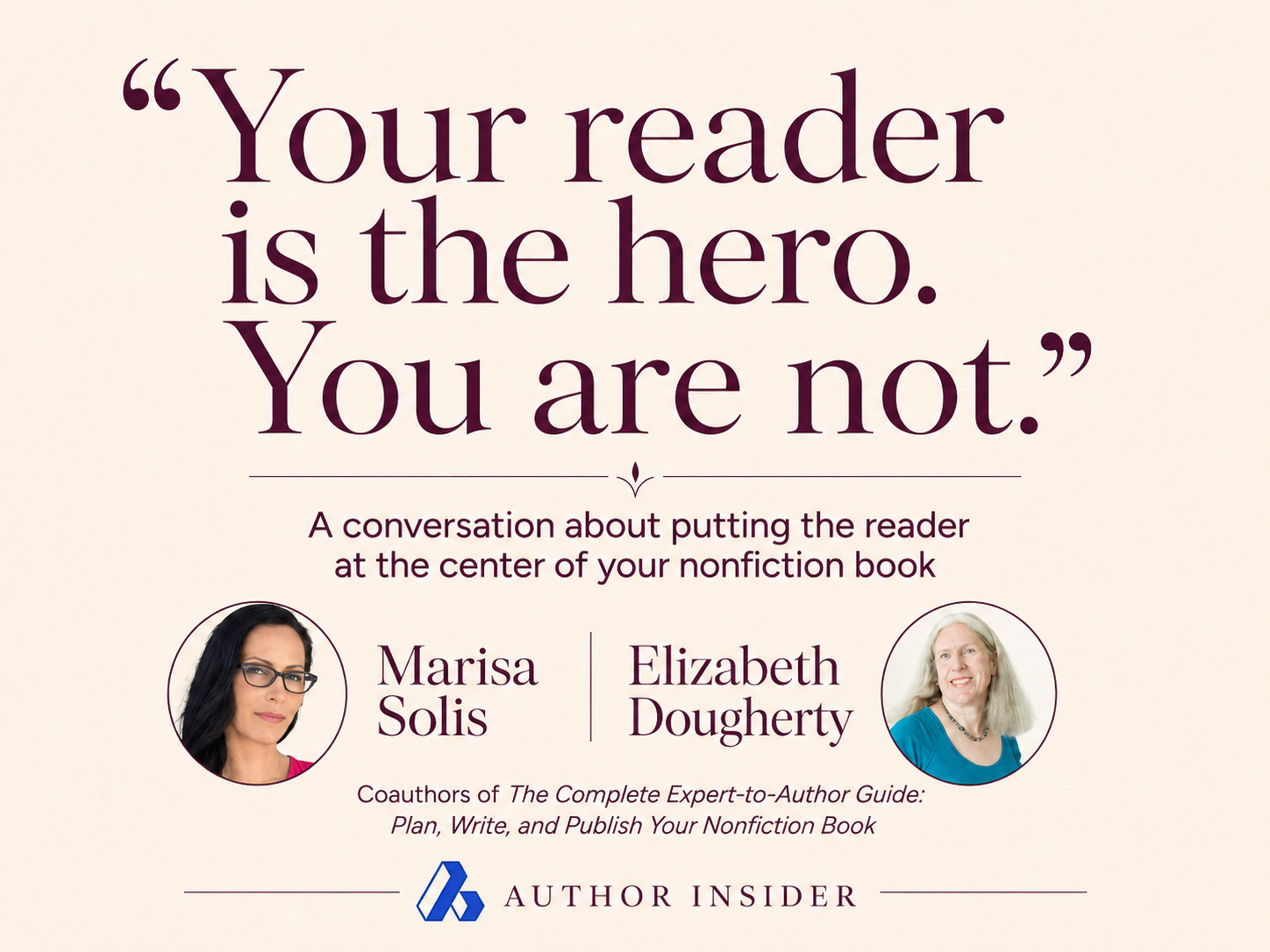
Those are all important questions. But according to book coaches and editors Marisa Solis and Elizabeth Dougherty, coauthors of The Complete Expert-to-Author Guide: Plan, Write, and Publish Your Nonfiction Book, there’s another question that’s just as important, and too often goes unasked:
Who, exactly, is my reader?
After working on more than 600 nonfiction books, they’ve come to believe that many prescriptive nonfiction books go sideways because authors become so focused on what they want to say that they lose sight of who they’re saying it to.
An important caveat: this isn’t true of every kind of nonfiction. Memoir, biography, history, and narrative nonfiction ask something different of the reader. But for books that aim to teach, persuade, or transform, Marisa and Elizabeth argue that the reader isn’t simply the audience—they’re the hero of the story.
It’s a subtle mindset shift, but it has significant consequences. When you begin writing for a specific reader rather than simply about a topic, decisions about structure, voice, anecdotes, chapter organization, and even sentence-level choices become much clearer.
During our live Author Insider Q&A, we explored how this idea plays out in practice, from book proposals and beta readers to introductions, personal stories, and the surprisingly powerful role of empathy in nonfiction.
In this conversation, we discuss:
Why the reader—not the author—is the hero of a nonfiction book
The biggest mistake experts make when writing for a general audience
How to know whether a personal story belongs in your manuscript
Why your introduction shouldn’t be about your credentials
How to use beta readers more effectively
A simple test for spotting places where you’ve lost sight of your reader
Why words like should, always, and never can weaken nonfiction
How planning your manuscript before you write can save months of revision
What surprised Elizabeth and Marisa most when they became authors themselves
I hope you enjoy the conversation. Thank you, as always, to everyone who joined us live and contributed such thoughtful questions.
For those who’d like to revisit specific sections, or search for a particular topic while working on your own manuscript, the full transcript is available below for paid and founding members.
-Panio Gianopoulos
