
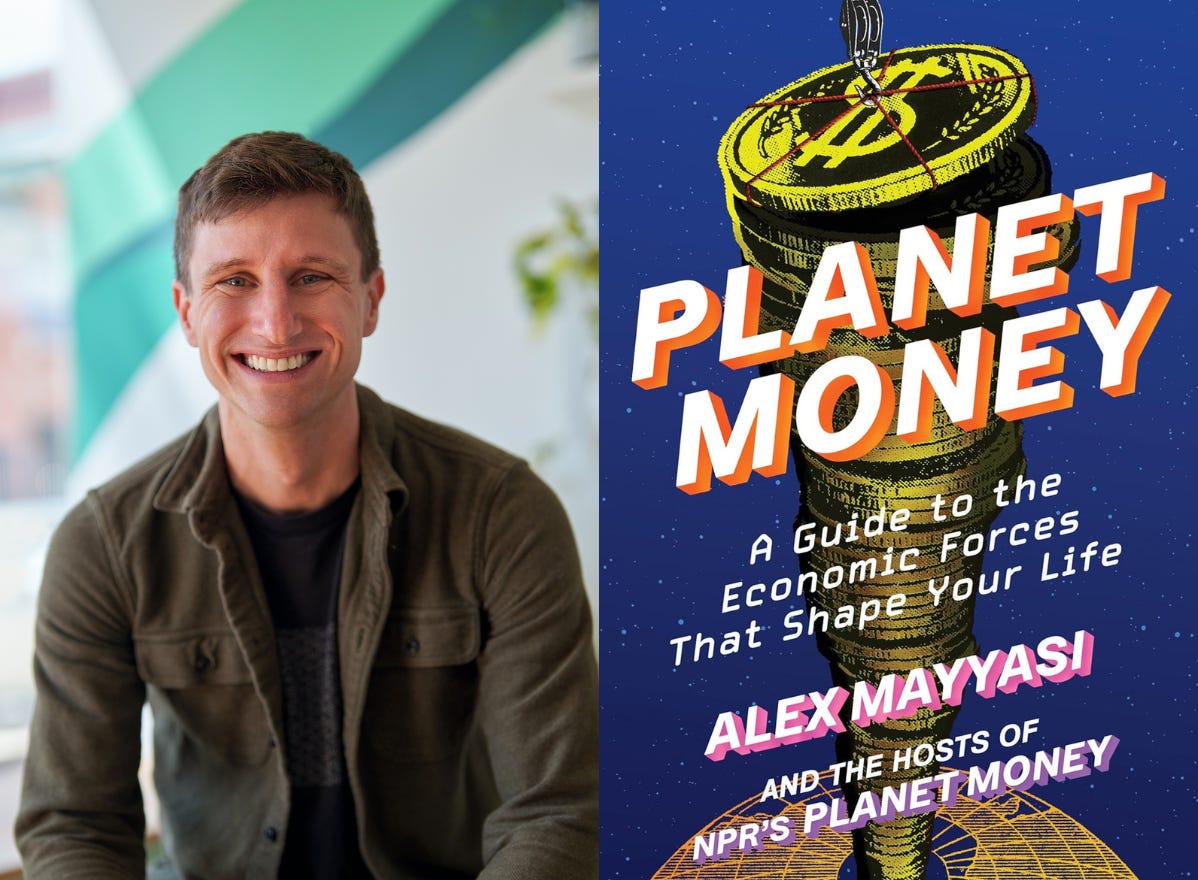
What if you could see the world the way an economist does? That’s the premise behind Planet Money, the hit NPR podcast that has spent years unpacking the hidden forces behind everyday life.
Alex Mayyasi, a longtime contributor to Planet Money, specializes in turning complex economic ideas into stories people actually want to follow. His work has appeared in The Atlantic, Smithsonian, and The Washington Post, and he previously helped launch the food publication Gastro Obscura, which went on to win two James Beard Awards and became a bestselling book of the same name.
His new book, Planet Money: A Guide to the Economic Forces That Shape Your Life (co-authored by the hosts of Planet Money), draws on more than a decade of reporting to show how economics shapes everything from jobs to relationships to the choices we make every day.
In this edition of 21 Questions, Mayyasi talks about storytelling, procrastination, and how not to lose a reader.
21 Questions with Alex Mayyasi
1. I couldn’t have written my last book without…
So many espressos. Matt Levine’s entertaining and informative newsletter, Money Stuff. A colleague telling me early on, with far more confidence than I felt, “You’re going to rock this.”
2. What’s the thing most people get wrong about being a writer?
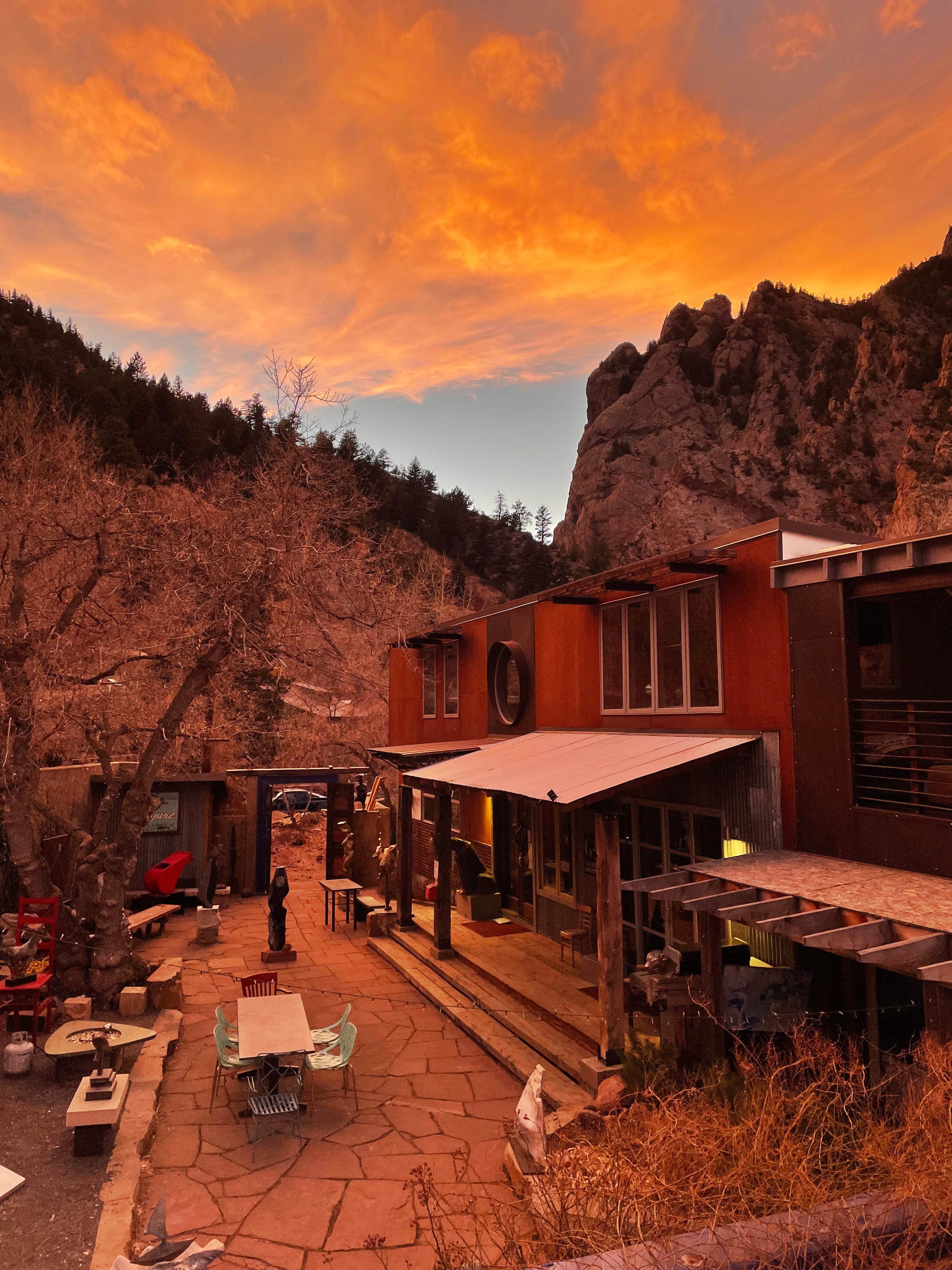
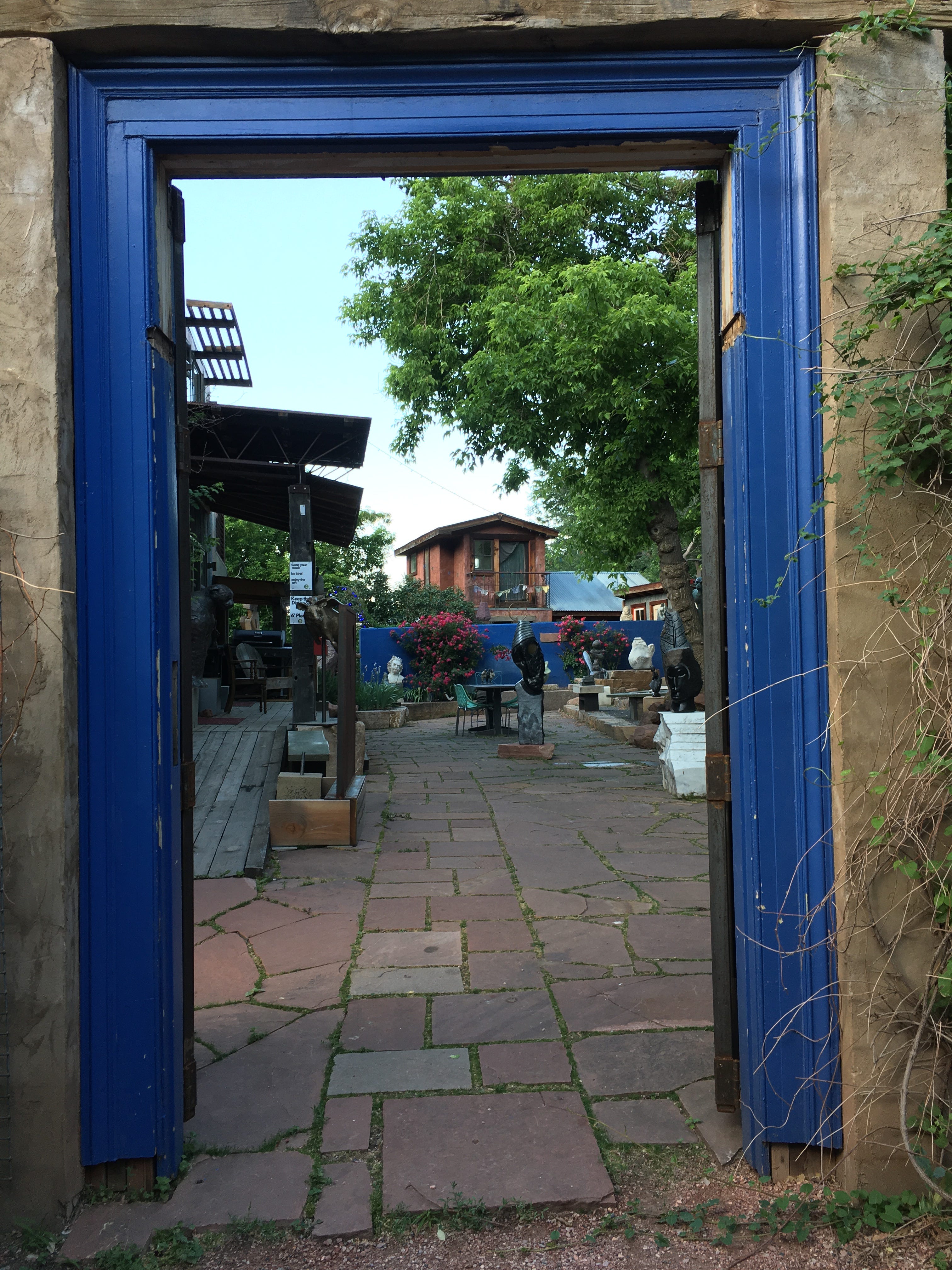
I did not write this book in a garret. I wrote this book in a little house inside a sculpture garden inside an arts center in a tiny town at the entrance to a state park.
3. What’s your most common form of procrastination?
Doomscrolling and TV. But I try to stick to productive procrastination, like cleaning the fridge or other writing that I’m not currently anxious about.
4. Do you read your reviews?
I try to filter for good-faith reviews from thoughtful people. Michael Lewis has a great anecdote about how a somewhat damning review of Moneyball inspired him to write The Undoing Project.
5. What’s the first thing you do after you finish a draft?
I like to do one re-read and polish, and then leave it alone for a bit. Stephen King has a great line about waiting long enough that your writing still feels familiar, but also a bit strange, like it was written by another version of you, so it’s easier to notice problems and kill your darlings. Because they’re the other guy’s darlings now.
6. Kiss, marry, kill: podcasts, newsletters, and speaking gigs.
Marry podcasts. They are my constant companions on walks and while washing dishes. And I’m launching one of my own! It’s about food and economics. It’s called Gastronomics.
Kiss newsletters. So many people are using the form in wonderful ways. Like the occasional missives I get from a writer developing a theory about how the universe is less like a rock and more like an egg that’s evolved over many life cycles.
Kill speaking gigs. But I’d prefer to kill short-form video.
7. What’s something you wish you’d started doing five years ago?
Create my own newsletter. Even just to email out my latest article or podcast episode. Not so long ago, I met someone in a cafe who expressed interest in my book and asked how he could follow my work. I had no good answer. What a whiff! A subscriber list is a way to “own” your relationship with readers and build something that scales over time.
8. Where do you find new ideas, and how do you keep track of them?
I try to always have my antenna up. Many ideas come from a throwaway comment in a conversation or interview. Or from a single line in a book or article. They all go in a messy Google Doc.
9. What’s the best piece of professional advice you’ve ever received?
I once had a boss who would pull out his phone during pitch meetings if he got bored. It wasn’t an act. You’d just lost him. The advice was unintentional but powerful: This is the reader. If you bore them, they will go away. Experiencing it live was powerful!
10. Whose career do you most admire and why?
I really admire people who’ve achieved mastery in multiple mediums, like books and audio. I want to be a double threat!
11. What’s on your nightstand right now?
Food books and econ books: The Taste of Empire, Lords of Finance, All Consuming: Why We Eat the Way We Eat Now. Because food and economics are my two obsessions, and I’m combining them into a podcast called Gastronomics. Yes, I am plugging it again!
12. How did you find your agent?
I asked another writer for advice on whether I should get an agent. She suggested I get advice from her agent. And her agent said that he’d like to be my agent. I asked him a hypothetical about what he’d say if I wanted to turn one of my most popular articles (about Subarus and lesbians) into a book. His answer was great!
13. What tech tools (AI included) do you actually use—and which ones do you actively ignore?
Automatic transcription services! Paired with TapeACall to record phone calls. Mostly out of habit. I think a recording feature is built into iPhones now.
I use AI as a research assistant. It’s surprisingly good when looking for an illustrative example or case study. I also find AI helpful when brainstorming section titles and headlines. It rarely suggests a winner, but it quickly produces many ideas that sometimes point me in a helpful direction.
14. What’s the best non-writing skill that’s helped your writing career?
Less planning, more learning by doing. I want to do ever-more research. I want to figure everything out and craft the perfect plan. But the perfect plan doesn’t exist. You can’t anticipate everything. Before long, diminishing returns set in and additional research and planning is just procrastination.
15. How many drafts before you show your editor?
When the book deadline is far off, I do multiple passes. When the deadline looms, I write the last line and email it immediately. Parkinson’s Law at work!
16. Can you describe your ideal workday?
I drive from my home in Colorado to a mountain town called Silverthorne, listening to research on the way. I park, pull out my bike, and ride up Loveland Pass. Then I descend back down, yelling gleefully, and get an early lunch in a coffee shop where I can write with a mountain view.
17. How does that compare to your actual workday?
I usually just bike to the library or my favorite coffee shop.
18. If you could write one book in a totally different genre than you usually do, which would it be?
During weekly happy hours with our cat, my girlfriend and I develop our novella idea about a very rational man from the city who goes to his hometown after the death of his uncle and… eventually there’s a mermaid. We feel it has strong potential to be adapted by Hollywood.
19. What’s something about the writing life that still surprises you?
That spending so much time alone during the workday makes me act like an extrovert after work.
20. Fill in the blank: In five years, successful authors will all be _____.
Millionaires. But fewer in number. Because of the superstar effect.
21. Anything you’d like to ask or crowdsource from fellow authors in the Author Insider community?
You know the book Never Eat Alone? Every weekday that I eat lunch alone, I feel like the author is just offstage and shaking his head disapprovingly. I’d love to find fellow writers and journalists to occasionally have lunch with (virtually or in person). If you’re interested, email me at alexmayyasi@gmail.com. If enough people reach out, I’ll play matchmaker between us all.
More from Author Insider
Author Insider is where writers get the real story of publishing—thoughtful conversations with bestselling authors and industry insiders, clear-eyed analysis of where the market is headed, and practical strategies for building a sustainable writing career. Whether you’re just starting out or several books in, the goal is the same: helping you make smarter decisions about your work.
If you’re new to Author Insider, here are a few reader favorites:
Until next time,
Panio Gianopoulos
Editorial Director, Author Insider & The Next Big Idea Club
Author Insider is a reader-supported publication. To receive new posts and support my work, please consider becoming a free or paid subscriber.