
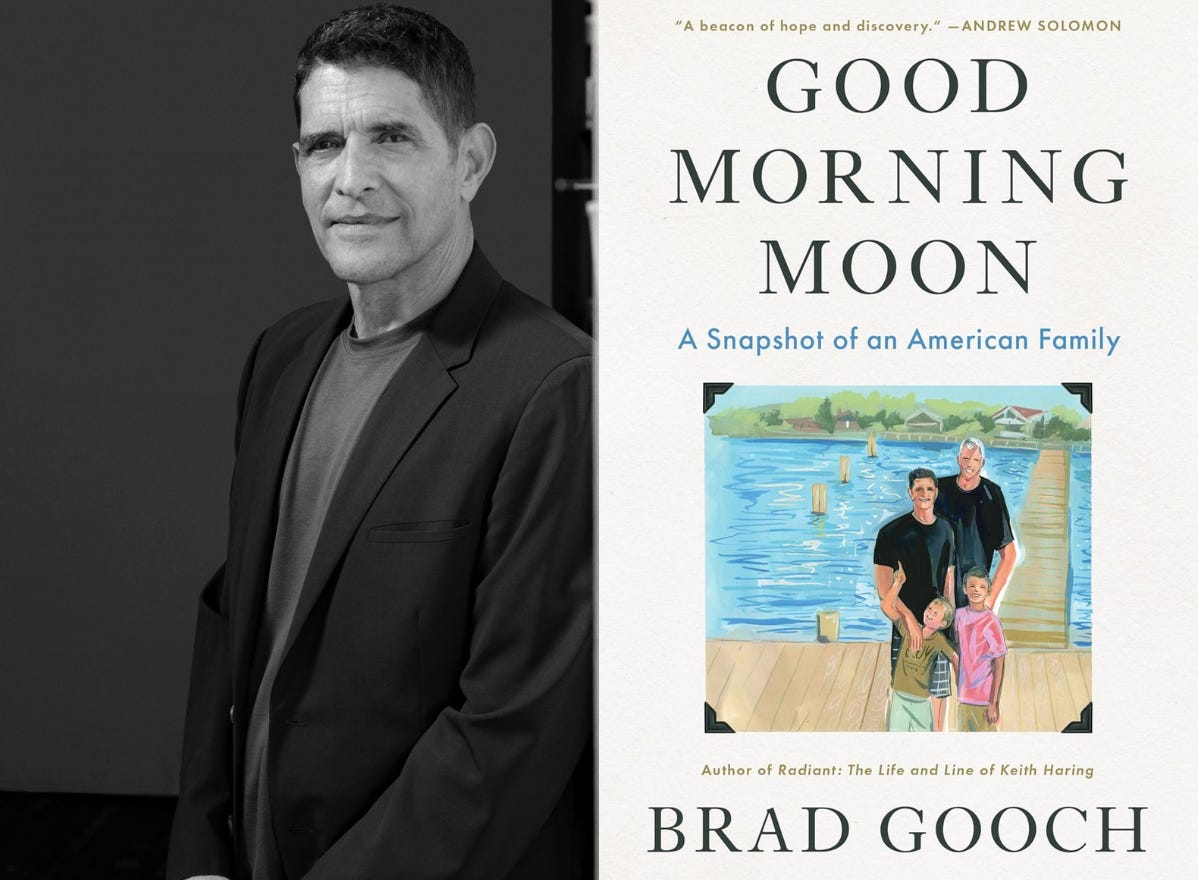
Brad Gooch is a poet, novelist, memoirist, and biographer whose subjects have ranged from Keith Haring and Flannery O’Connor to Frank O’Hara and the spiritual landscape of America itself.
His newest book, Good Morning Moon: A Snapshot of an American Family, turns the lens inward. Part memoir and part family story, it traces an unexpected journey from the downtown New York of the 1970s and ’80s to marriage, parenthood, and family life in the 2020s, a transformation that sometimes leaves even the author wondering, “How did I get here?”
In this edition of 21 Questions, Gooch reflects on memoir, biography, literary obsessions, and the surprises that can emerge over the course of a writing life.
21 Questions with Brad Gooch
1. I couldn’t have written my last book without…
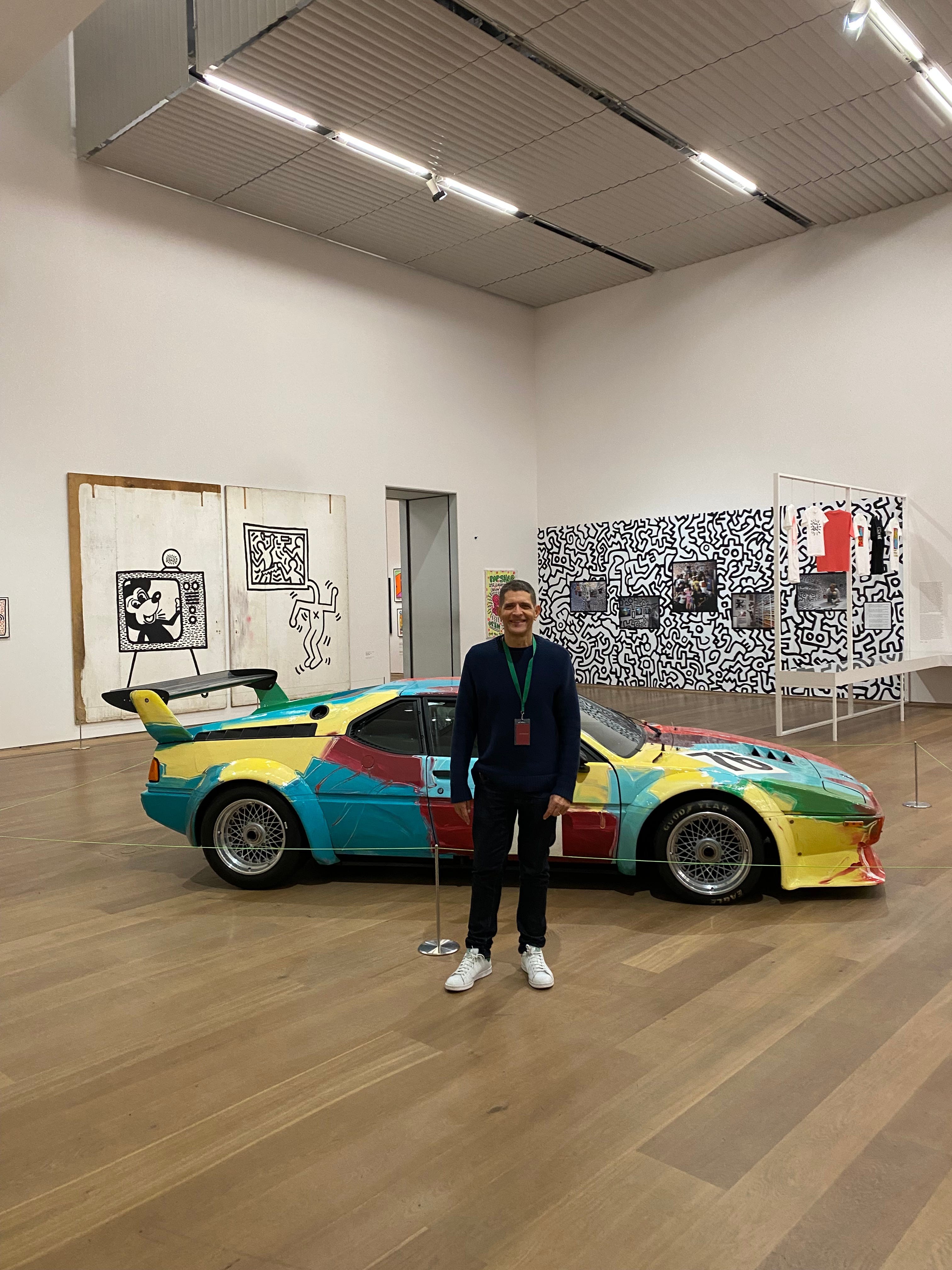
Living in the 1980s East Village a few degrees of separation away from Keith Haring, the biographical subject of Radiant. (Well, I could have written it but from another p.o.v.)
2. What’s the thing most people get wrong about being a writer?
That you can do it anywhere. “Bring your laptop and finish your book here. We’re having a house party. We’ll set you up on the outdoor deck with a cold drink and let you be.”
3. What’s your most common form of procrastination?
Instagram.
4. Do you read your reviews?
I skim them. If I come across some warm adjectives, I go back and read more closely.
5. What’s the first thing you do after you finish a draft?
Draft of what? For me, unfortunately, every sentence is a draft. I’m a major tinkerer. Word processing has only slowed me down as it’s easier to try out even more variations.
6. Kiss, marry, kill: podcasts, newsletters, and speaking gigs.
I get flak for not listening to podcasts. They’re like radio, right? I still don’t know where to find them. And I can’t think of a single newsletter. Since speaking gigs have turned mostly into live onstage conversations, I’m much happier. I used to treat them as one-act, one-person standup monologues rewritten for each event. It’s nicer to have a partner—hopefully a lively, wordy one—up there on stage blowing in the wind along with you.
7. What’s a writing habit you’re embarrassingly superstitious about?
I prefer writing paragraphs as perfect boxes with no spillover of words into a widow word or phrase onto an extra line. If I add a few new words in the text, creating an untidy last line, I feel a need to rewrite other parts until the perfect box is restored. I don’t carry this mania over into the publishing, so only an alert editor might detect my psychosis.
8. What’s something you wish you’d started doing five years ago?
Recording on Voice Memo on my iPhone rather than on my 1980s-style Sony cassette recorder, which is nicely retro but clunky, and its cassettes are more difficult to restock.
9. Where do you find new ideas, and how do you keep track of them?
I try not to find new ideas but to stick to old ideas, at least for biographies. I rely on hunches I’ve had for a subject for at least a decade and have kept coming back to—Frank O’Hara; Flannery O’Connor; Keith Haring. Biographies are so time and labor-intensive that you don’t want to discover midway that you’re bored or repelled by your choice.
10. What’s the best piece of professional advice you’ve ever received?
When I was at Columbia College and upset by not receiving a writing prize whose name I have forgotten, my “Imaginative Writing” instructor, the poet Kenneth Koch, said to me, with his murmur of a stammer, “M-M-Mister Gooch, you rely too much on authority.”
11. And the worst?
When I was a nascent writer with no agent, a friend offered to show some of my writing to a friend of his, a well-known literary agent. She advised me to read more Henry James.
12. What’s on your nightstand right now?
When All the Men Wore Hats, Susan Cheever; City Boy, Edmund White; The School of Night, Karl Ove Knausgaard; New York City’s Best Public Schools and The Manhattan Guide to Private Schools and Selective Public Schools.
13. What’s a writing rule you’ve happily broken?
Only write a memoir if you’re a celebrity.
14. What tech tools (AI included) do you actually use—and which ones do you actively ignore?
Perhaps the original AI tool was the Thesaurus. If I’m worrying over a dull word or a repetitious word, I no longer stop myself from checking an online Merriam-Webster or WordHippo. Yet most often, the word I finally land on appears on none of their lists of dozens of synonyms. In my experience, lots of AI tools are likewise iffy buzzkills.
15. What’s the best non-writing skill that’s helped your writing career?
Introversion.
16. Can you describe your ideal workday?
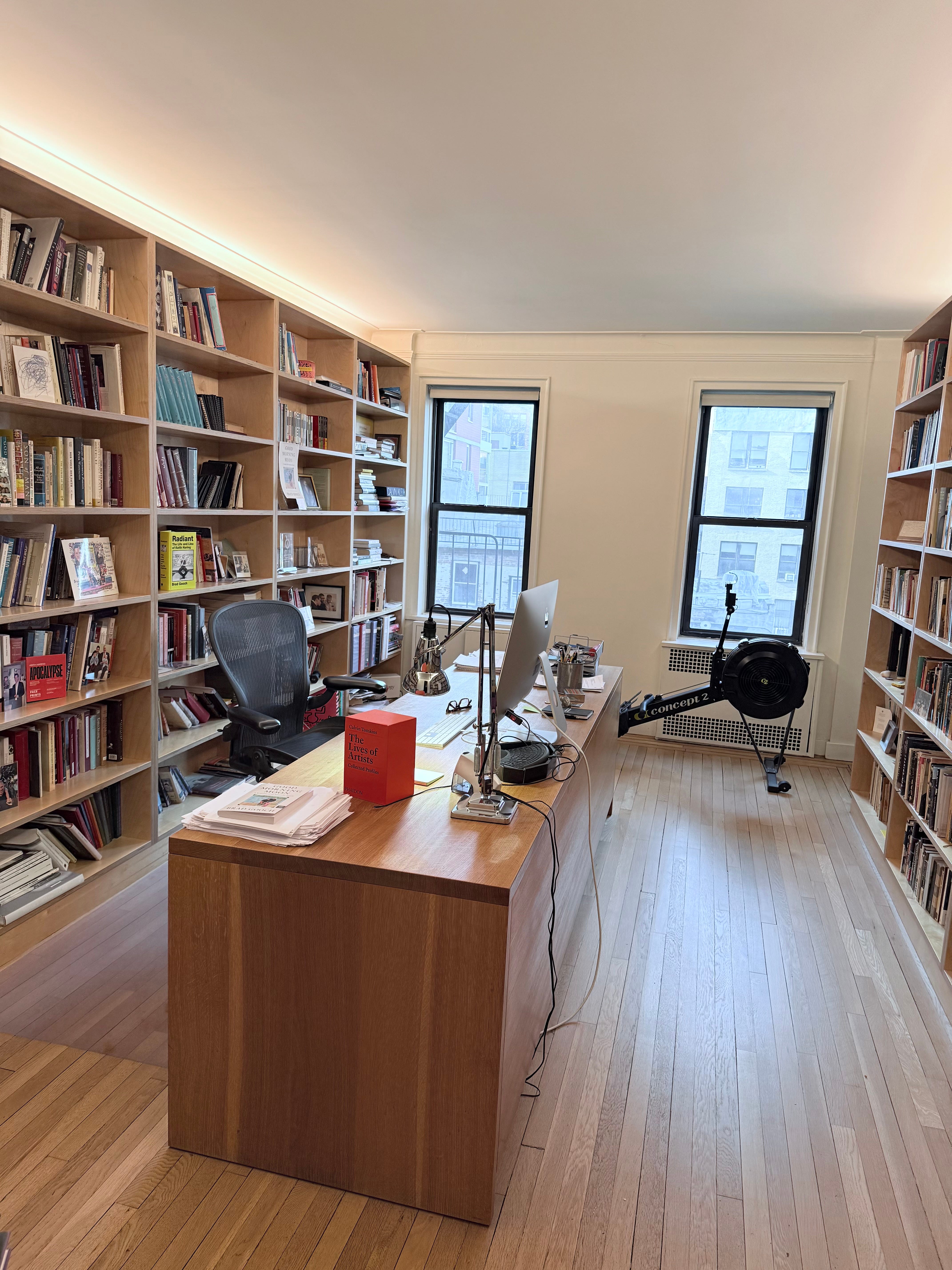
My ideal day would be keeping banker’s hours, 9 am to 3 pm, writing in a cork-lined studio.
17. How does that compare to your actual workday?
Pretty closely. My writing studio is not cork-lined but it’s quiet and off-site, a two-block walk from my home. Two days a week I do escape to a trainer at a gym six blocks away.
18. If you could write one book in a totally different genre than you usually do, which would it be?
A book for a musical by Stephen Sondheim.
19. What’s something about the writing life that still surprises you?
I’m always surprised—at book signings or teaching a writing seminar—how many young people still aspire to be writers.
20. Fill in the blank: In five years, successful authors will all be ___.
Unable to stop writing.
21. What is your new book about?
It’s a memoir about a gay guy from the 1970s (me) who wakes up in the 2020s to find that he is married (to a man) and has two young kids. Often, above my head, hovers the thought balloon, “How did I get here?” This book attempts to answer that question.
If you enjoyed Brad’s Q&A, you can learn more about his new book here: Good Morning Moon: A Snapshot of an American Family.
More from Author Insider
Author Insider is where writers get the real story of publishing—thoughtful conversations with industry insiders and bestselling authors, clear-eyed analysis of where the market is headed, and practical strategies for building a sustainable writing career. Whether you’re just starting out or several books in, the goal is the same: helping you make smarter decisions about your work.
If you’re new to Author Insider, here are a few recent reader favorites:
How to Stay Creative in a World That Won’t Stop Distracting You: Q&A with Austin Kleon
Somehow, This is Working: 21 Questions with Jenny Lawson a.k.a The Bloggess
Until next time,
Panio
Author Insider is a reader-supported publication. To receive new posts and support my work, consider becoming a free or paid subscriber.