
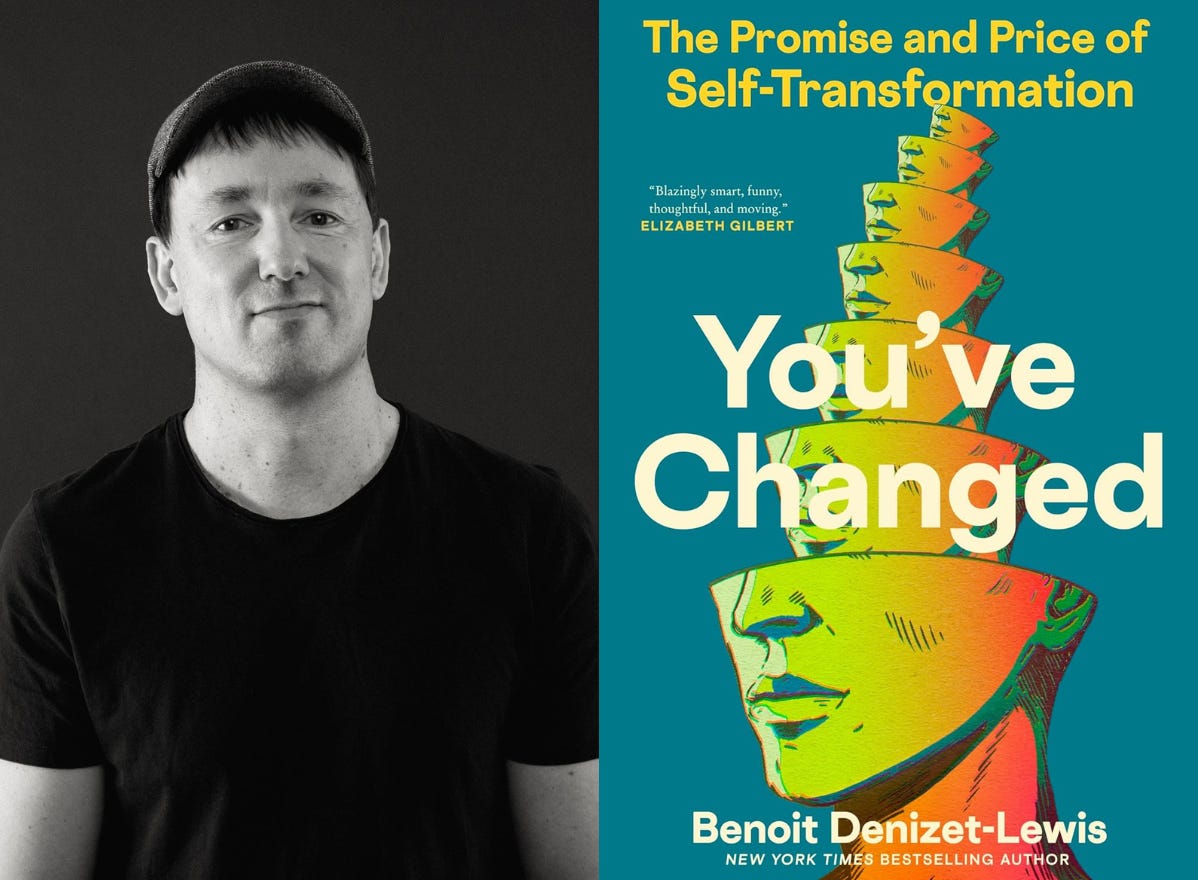
A longtime contributor to The New York Times Magazine, Benoit Denizet-Lewis has covered stories about everything from why American teenagers are suffering from escalating levels of anxiety to overbred bulldogs to transgender conservatives in the Trump era. He’s the author of three previous books, including America Anonymous: Eight Addicts in Search of a Life and the New York Times bestseller Travels With Casey.
His new book, You’ve Changed: The Promise and Price of Self-Transformation, explores what it really means to remake ourselves in a culture obsessed with reinvention.
In this edition of 21 Questions, Benoit reflects on process, persistence, and the long road to finishing a book.
21 Questions with Benoit Denizet-Lewis
1. I couldn’t have written my last book without…
My student research assistants, my therapist, my gay and straight group chats (though the boundaries blur in the age of identity fluidity), my husband, and people I met naked in the baths at the Esalen Institute in Big Sur, where, as the social psychologist and political scientist Walter Truett Anderson put it, “Some of Western civilization’s leading philosophers, theologians, educators, scientists and therapists… have eased their eminent rears down in the hot water to sit and consider the surging sea.”
2. What’s the thing most people get wrong about being a writer?
That we choose what we write about. I’m not convinced I chose the subject of transformation so much as it’s just another way I’ve become my father. We’re both writers interested in change who also—and I still can’t believe this is real—each fell in love with and married a person from the Czech Republic.
There are, in my defense, differences between us, but in my book I quote the writer and professor G’Ra Asim, who, rather dispiritedly for those of us who like to believe we’re driving the bus of our self-transformations, declared, “At best people have a 15-year span of hubris-driven confusion before they morph helplessly into their parents and grandparents.”
3. What’s your most common form of procrastination?
Reading magazines, Northwestern sports message boards, and Nietzsche. That’s two truths and a lie.
4. Do you read your reviews?
I dislike this question, which probably answers it.
5. What’s the first thing you do after you finish a draft?
Find something to change about it. Old habits.
6. Kiss, marry, kill: podcasts, newsletters, and speaking gigs.
I know the game by another name, but I’ll play along. I would “kiss” podcasts, marry speaking gigs, and, though I enjoy the newsletters of others, kill newsletters.
7. What’s a writing habit you’re embarrassingly superstitious about?
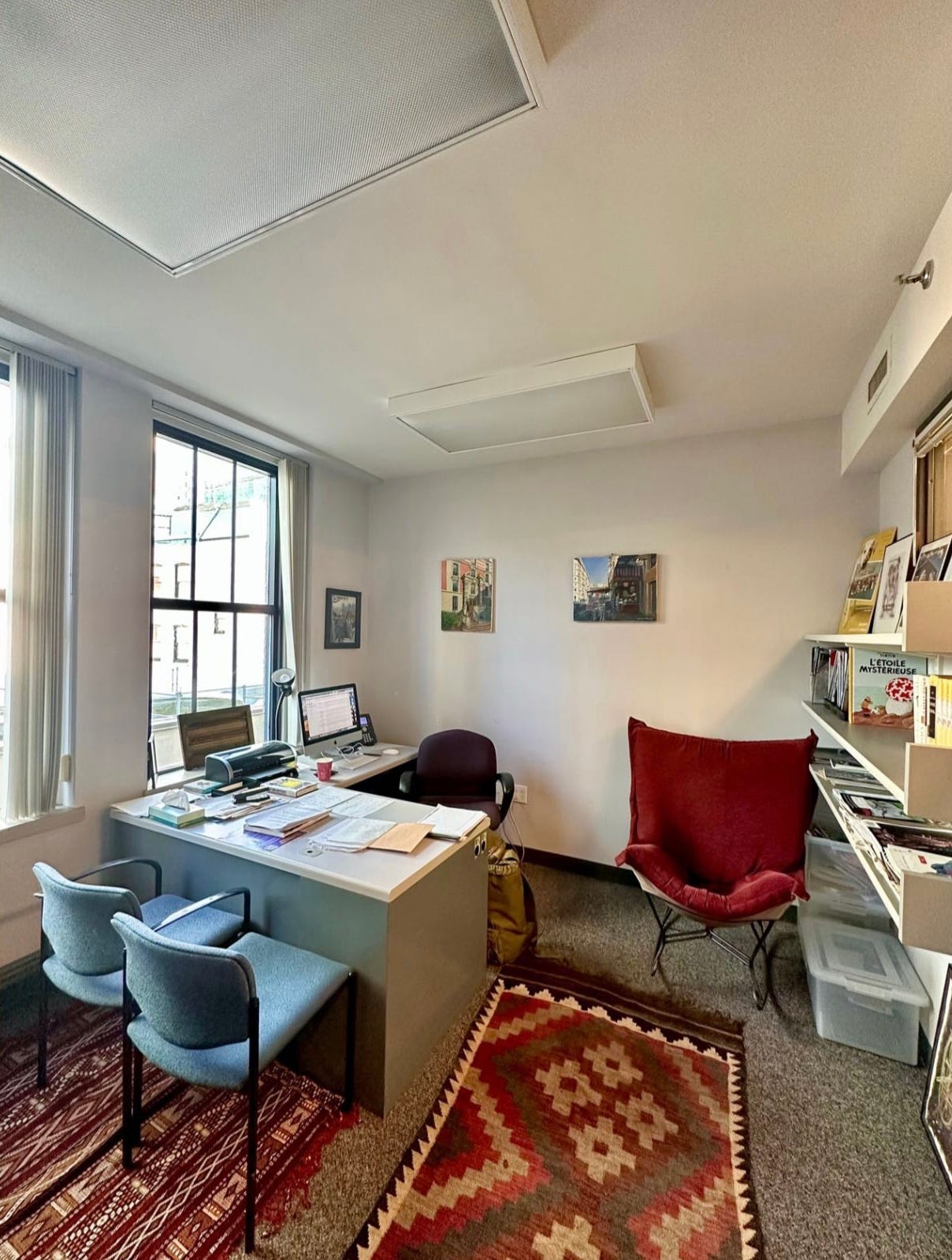
At least once each writing day, I print out what I’ve written and edit it on paper. Then I also read what I’ve written on my iPhone. I catch entirely different problems depending on what format I’m editing my work, and I can’t believe anyone turns in anything without reading it in multiple formats.
8. What’s something you wish you’d started doing five years ago?
Figure out how to organize my research digitally. When I travel to Prague, where I spend many of the months I’m not teaching, I tend to lug suitcases of books and files like I’m relocating a minor research institute. My husband finds this very annoying, especially when I make him carry the heaviest suitcase to the car.
9. Where do you find new ideas, and how do you keep track of them?
I have purchased many beautiful blank books in my life, intending to use them to write down ideas. They’re still empty. That’s not to say I don’t have ideas, but they exist in my head. And I find ideas everywhere, especially when I manage to look up from my iPhone.
10. What’s the best piece of professional advice you’ve ever received?
When you’re struggling with structure, go for a walk or take a shower. Showers work particularly well for me; almost every good structural decision I’ve ever made came to me—like an epiphany—with water raining down on me.
11. And the worst?
“Maybe stop pitching the New York Times Magazine.” When I was young, I pitched editor Ilena Silverman—now the magazine’s Deputy Editor for Features—about ten ideas over the course of a year. Ilena said no to all of them but encouraged me to keep pitching. A friend suggested I stop embarrassing myself and move on, but I’m glad I didn’t listen. Ilena liked the eleventh idea, and I’ve been writing for her and the magazine ever since.
12. Whose career do you most admire and why?
The Buddhist nun, Pema Chödrön. I’ve never met her, unfortunately, but from a distance, she’s the coolest person in the world. Chödrön has lived an incredible life and has written beautiful books that have helped countless people going through hard times. Also, part of me has wanted to be a monk since I was a kid.
13. What’s on your nightstand right now?
I’m not convinced anyone has ever answered this question truthfully—and I won’t be the first. In my defense, I don’t typically read in bed. Some of the books on the coffee table near my couch, where I do read: True Nature, the brilliant biography of Peter Matthiessen by my friend Lance Richardson. In Love with the World by Yongey Mingyur Rinpoche, which I assign to students in an interdisciplinary class I teach about transformation and identity change, the same themes I explore in my book. And Murder Your Darlings, a fabulously titled thriller by my friend Jenna Blum, set in literary circles that I’m excited to begin.
14. How did you find your agent?
Todd Shuster of Aevitas Creative invited me to lunch two decades ago. I text him so often that it’s likely he regrets it.
15. What’s the best non-writing skill that’s helped your writing career?
I’m a curious person who likes when people change my mind.
16. How many drafts before you show your editor?
I have many editors—friends, exes-turned-friends who are lawyers but should be editors, research assistants, and finally my actual editor. I never send anyone a draft I’m completely ashamed of, but I do send early drafts to people who I trust to tell me whether it’s time to murder a few darlings.
17. Can you describe your ideal workday?
I wake up in my imaginary house in Provence, write for a few hours, and then spend the rest of the day reading, walking the dog, eating cheese, and, after the sun goes down, drinking Chablis with friends.
18. How does that compare to your actual workday?
It’s very different.
19. If you could write one book in a totally different genre than you usually do, which would it be?
I fancied myself a young Harold Pinter as a teenager, so I’d probably try to write a play about people struggling to connect.
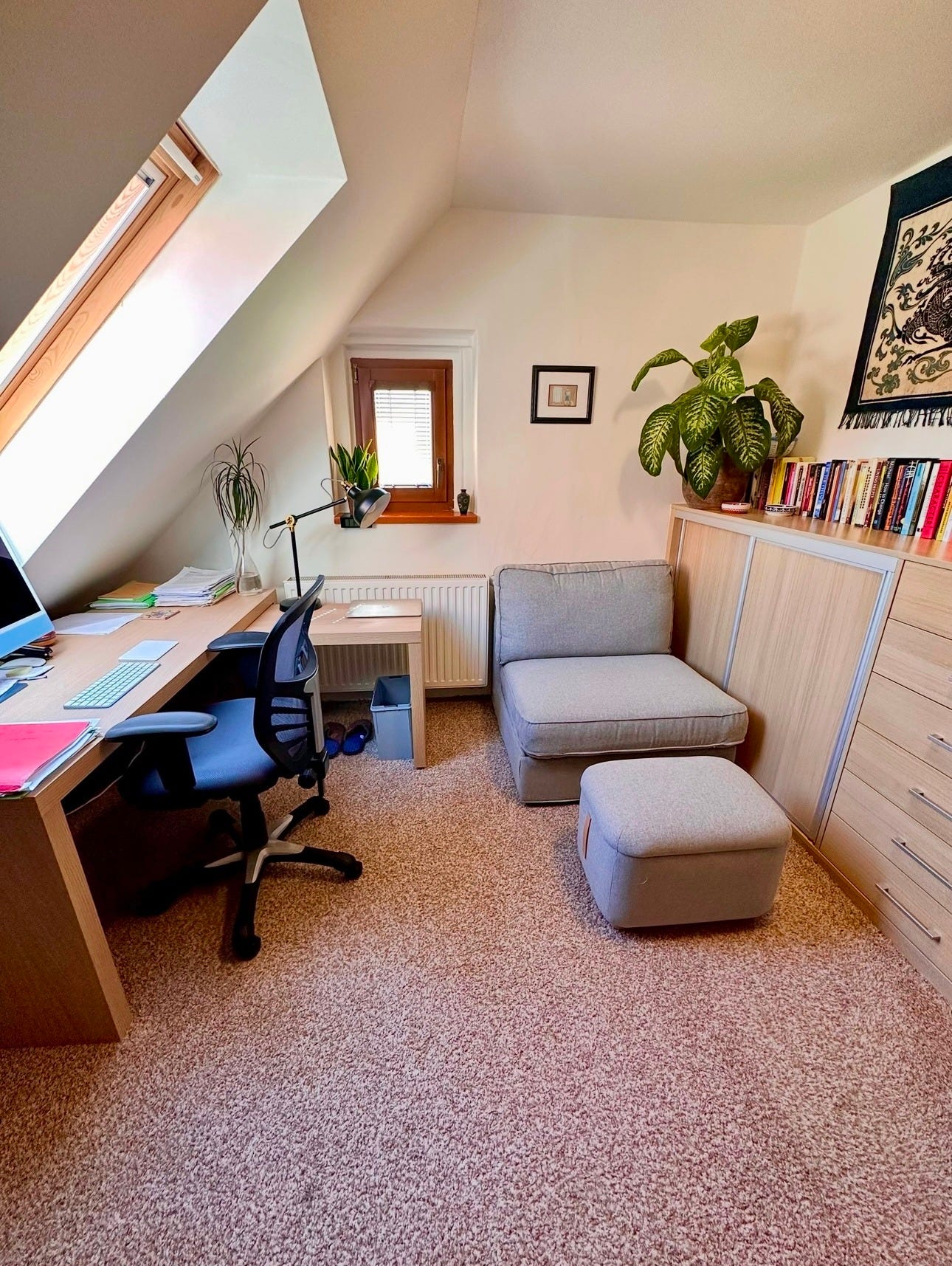
20. What’s something about the writing life that still surprises you?
How hard it is. I spent six years on this book, and my husband has implored me not to begin a new one for many more.
21. What is your new book about?
You’ve saved the best question for last! You’ve Changed is about the biggest mystery of all—how and why we change, or don’t. Drawing on six years of reporting, it traces the chosen and unchosen forces that shape our transformations. It’s also a book about our surreal decade: the most intense wave of identity change since the 1970s, another period marked by social upheaval and political disillusionment.
In a culture where change is narrated and judged, some transformations are embraced while others are dismissed as suspect or strategic. (The shift as grift.) My book asks not only how change happens, but who gets to decide whether it’s real—and, in its final chapter, what it might look like to “be the change” in a strange and disorienting moment like ours. That famous phrase turns out not to come from Gandhi at all, but from an octogenarian I visited in her Arizona retirement community—one of many people who changed my mind about change.
More from Author Insider
Author Insider is where writers get the real story of publishing—thoughtful conversations with bestselling authors and industry insiders, clear-eyed analysis of where the market is headed, and practical strategies for building a sustainable writing career. Whether you’re just starting out or several books in, the goal is the same: helping you make smarter decisions about your work.
If you’re new to Author Insider, here are a few reader favorites:
Until next time,
Panio Gianopoulos
Editorial Director, Author Insider & The Next Big Idea Club
Author Insider is a reader-supported publication. To receive new posts and support my work, please consider becoming a free or paid subscriber.
I REALLY enjoyed reading this!! So interesting and fun to read!