
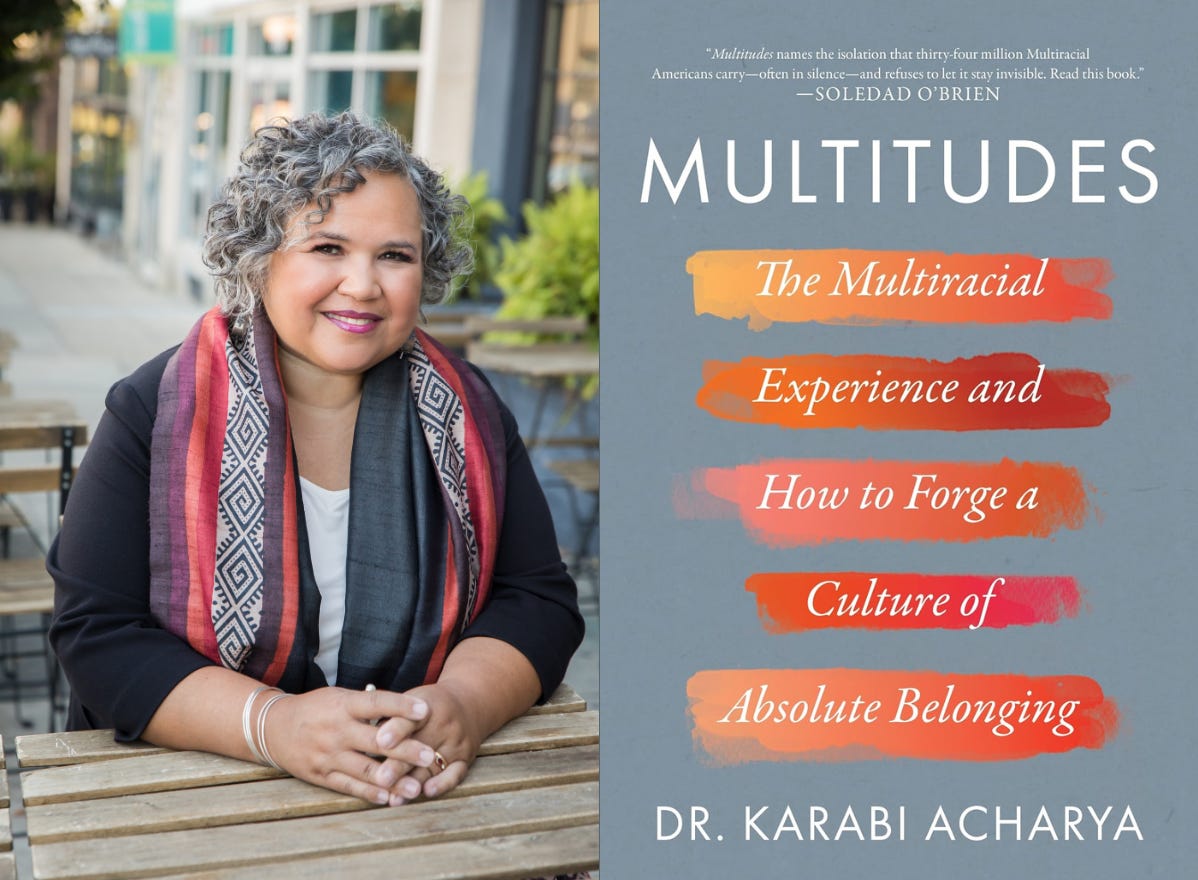
Dr. Karabi Acharya is a leading global public health practitioner whose work explores health, equity, and the systems that determine who gets seen. She has lived and worked in more than twenty countries with organizations including the World Health Organization, UNICEF, the World Bank, the Ford Foundation, and USAID. Today, she is a senior director at the Robert Wood Johnson Foundation, the largest philanthropy in the United States devoted to health, where she leads the Global Ideas for U.S. Solutions portfolio.
Her first book, Multitudes, brings that systems-level perspective to an intensely personal question: What does it mean to belong when the categories around you fail to reflect who you are? Blending memoir, interviews with thirty Multiracial people, and research into identity, health, and belonging, Acharya makes visible a population that has long been overlooked—and argues for a more expansive understanding of who we can be.
21 Questions with Dr. Karabi Acharya
1. “I couldn’t have written my latest book without…”
AJ Harper and the Top Three Book Community. Since I’d never written a book before, I followed AJ’s practical tools for breaking down what felt like a Herculean task. And the community she's built kept me going and helped me feel like I was actually a writer.
2. What’s the thing most people get wrong about being a writer?
There’s this image that a writer sits in a lovely cottage surrounded by flowers, overlooking the mountains. And she gazes off into the horizon, sipping herbal tea, while typing serenely on a laptop. My reality was nothing like this, except for the herbal tea.
3. What’s the first thing you do after you finish a draft?
Stretch, take deep breaths, go for a long walk. Rest my brain and my eyes.
4. Do you read your reviews?
Yes! This is all new for me, so I get excited that anyone has taken the time to read the book. When the inevitable negative reviews come in, I will likely read them and obsess over them for days.
5. What’s the best piece of professional advice you’ve ever received?
The people you work with are more important than the issue you are working on. For a long time, I’ve picked projects and jobs based mostly on the people involved.
6. Where do you find new ideas, and how do you keep track of them?
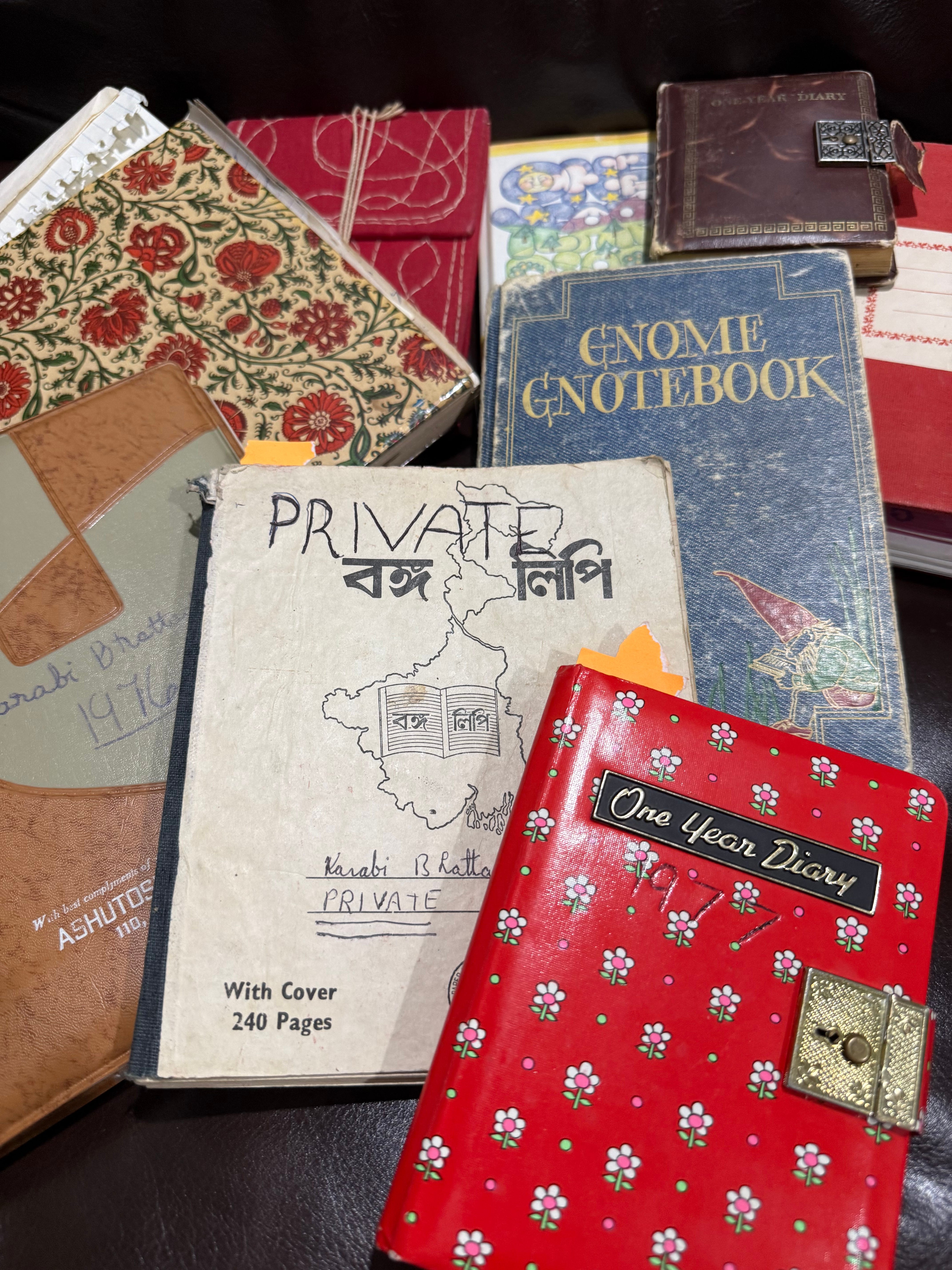
I find them everywhere! I believe in webs of knowledge where any idea can connect to every other idea eventually. I travel extensively and always learn so much from seeing how other societies are structured. I read tons of fiction and non-fiction. Through my day job, I connect with people working across a wide range of issues. I don’t have an organized way to track ideas. I sometimes write snippets in my notes app or email myself and I’ve been trying to revive my journaling practice.
7. What’s something about you that people wouldn’t guess from your bio?
I started an organization, Conquering Gyrate Atrophy, to raise funds for research on gyrate atrophy, a progressive retinal disease that my daughter has. We’ve raised over $500,000 and are supporting gene therapy research and are remarkably close to a cure. Maybe I need to add it into my bio.
8. How did you find your agent?
One of my classmates in AJ Harper’s workshop had an agent and a book deal which seemed like magic to me at the time. I was still trying to figure out how to write a proposal. But she encouraged me to reach out to her agent, who responded within the hour. Jennifer Thompson, Nordlyset Literary Agency, has been the best agent anyone could hope for.
9. What have you stopped doing that made you a better writer, or made the writing life better?
I’ve stopped thinking that I had to clear large swaths of time to write, a full day or even a week’s retreat. I stopped imagining myself in a country cottage in the mountains. I’ve discovered that I often write best in the nooks and crannies of time in the corners of very busy days. My book is about being liminal in my identity and I tend to write best in liminal spaces. Some of the best things I’ve written have been at airports.
10. What tech tools—including AI—do you use, and which ones do you actively ignore?
The tools always open when I’m writing are Word, an online thesaurus and a citation generator. Reluctantly I have used AI for research and found it much better than Google Scholar for finding research leads which I always verify against the original. I don’t use any tech tools for the actual writing.
11. What’s one thing you pay for that has been worth every penny to your writing career?
Spotify premium! Ads really disrupt my writing flow. Also my favorite pens and notebooks.
12. How many drafts do you typically go through before showing the manuscript to your editor?
I purposely don’t count drafts. I’ll work on a chapter iteratively and keep coming back to it. Then I’ll work across chapters and keep fiddling with it until the deadline. Or until I can’t bear to type another word.
13. Describe your ideal workday. How does it compare with your actual one?
After a very good night’s sleep, wake up around 8am and read the newspaper over coffee. Do one or two meetings, go through all my email and get to a zero inbox. Eat lunch in a lovely garden. Spend the afternoon reading, writing, reviewing materials or preparing for a talk. Then I take a long walk in the late afternoon with a friend or my husband.
My actual workday begins with a groggy latte, having stayed up too late. I move from one Zoom meeting to another from 9 am to 5 pm, often in 30-minute increments, and madly do emails in between. I usually get in a walk or exercise class in the early evening. After dinner, I often write or do other activities related to the book.
14. What’s your most common form of procrastination?
Cooking, cleaning out closets, organizing the basement, cutting my nails, weeding the garden, watching all the videos my kids send me, starting a complicated knitting project. I am a master procrastinator!
15. What’s the best non-writing skill that’s helped your writing career?
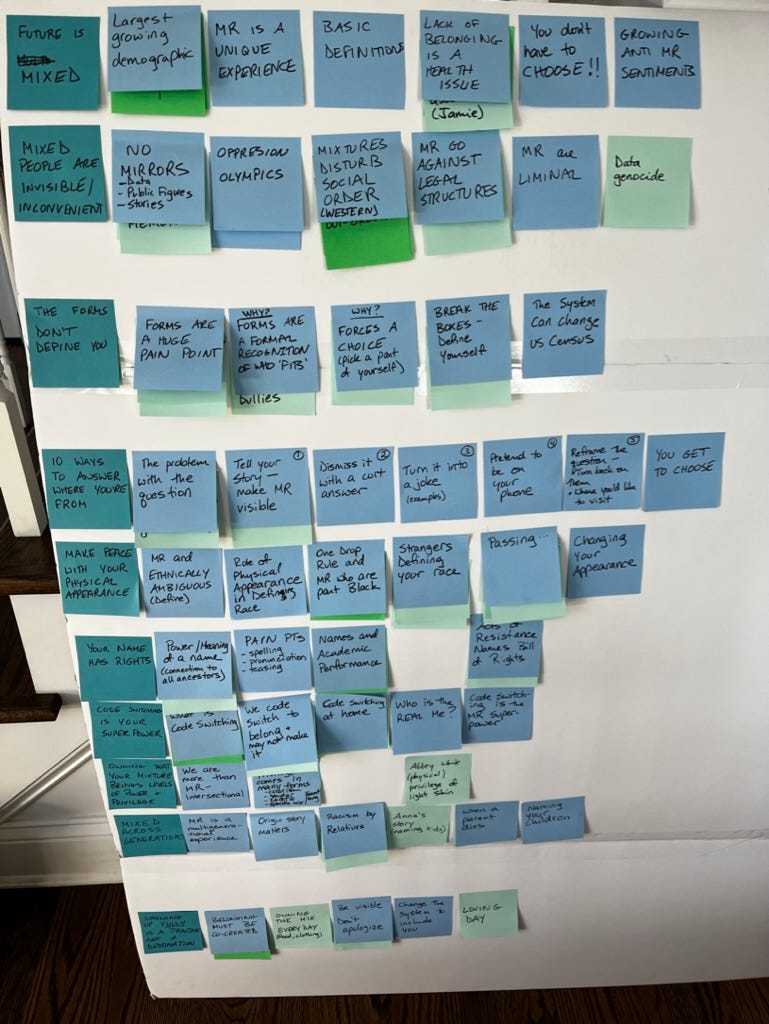
My qualitative and ethnographic research skills. I conducted in-depth interviews for the book, used participant observation in the Multiracial spaces I joined and identified patterns and themes as they emerged.
16. What’s the strangest or most unexpected response you’ve received from a reader?
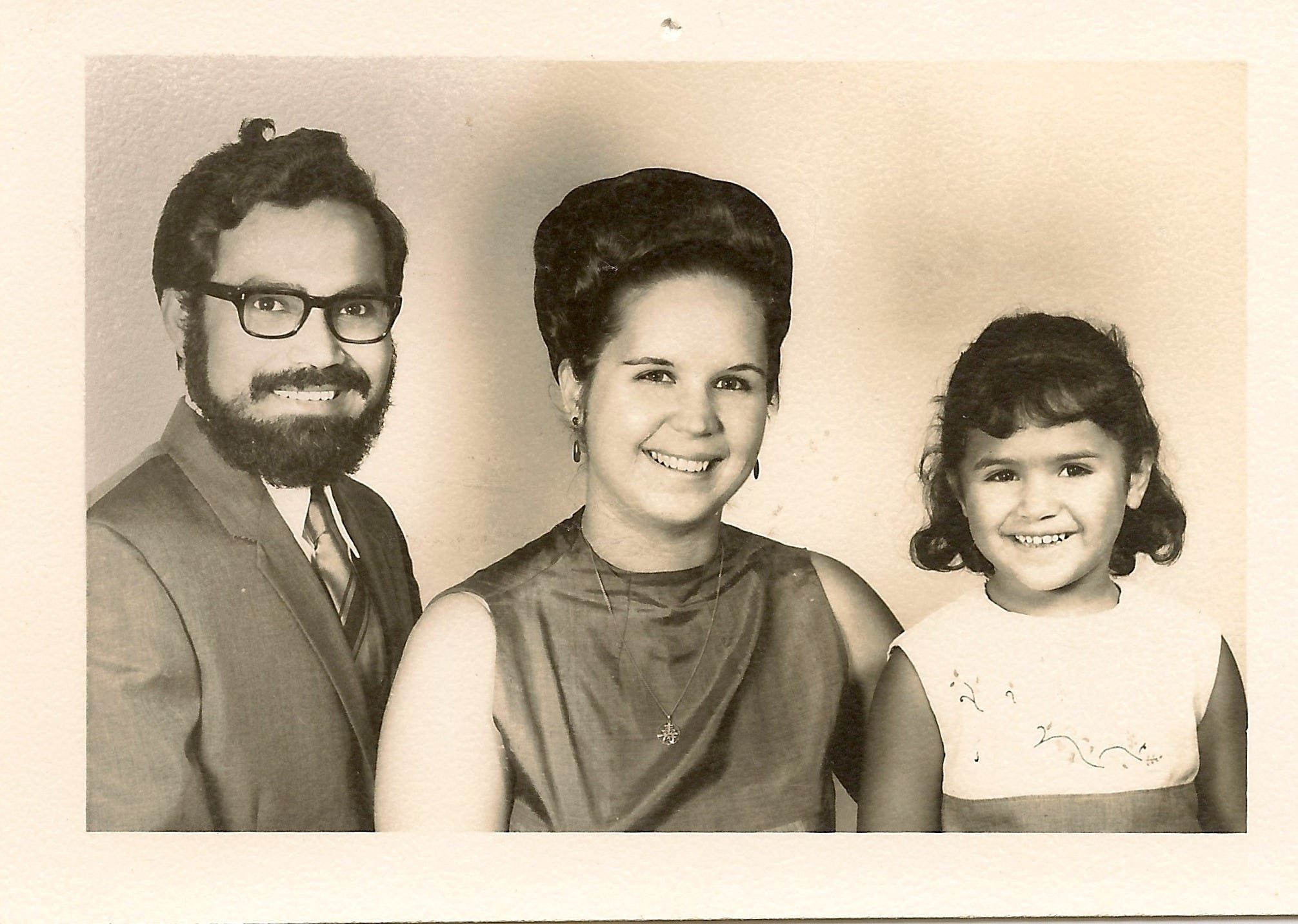
One reader didn’t believe that I had never seen another Multiracial person outside my family, in the media or in real life, until I was in graduate school. With growing numbers of Multiracial people in the population, it’s hard to imagine how completely invisible this population was in the seventies or eighties.
17. What’s something you’ve changed your mind about recently?
My mind was blown when I read The Light Eaters by Zoë Schlanger, about the science of plant intelligence. There is very convincing evidence that plants can hear, can predict the sunrise, and communicate in complex ways. What if plants are sentient beings? I confess this has changed my entire experience of mowing the lawn!
18. What are you unwilling to do to sell more books?
In a world of TikTok and sound bites, I wouldn’t simplify the stories or the messages of the book. I won’t strip the historical and cultural contexts out of the Multiracial experiences. The entire premise of the book is recognizing the beauty and power of our complexity as human beings. None of us are one thing—we are parents and engineers and bartenders, gay and transgender, Black and Latino, opera lovers and opera haters. We are all many; we are all multitudes.
19. If you could write one book in a totally different genre, what would it be?
A novel. A long, delicious novel spanning a lifetime that dives deep into compelling characters.
20. What’s something about the writing life that still surprises you?
I always had this idea that writing is somewhat linear: you learn something and then write it down. But I find it is a completely emergent process. The process of writing is how I come to understand the world and myself. I had planned to write one book and ended up writing something very different.
21. What is your new book about?
Multitudes is about the experience of being Multiracial. More than 33 million Americans identified as Multiracial in the 2020 Census, yet we remain largely invisible in data, institutions, and popular culture. The book is a hybrid memoir that weaves together my own story, the stories of 30 people I interviewed, and research into why we’ve been overlooked. I try to explain what makes the Multiracial experience distinct and how we can build cultures and systems where everyone belongs.
You can learn more about Dr. Karabi’s book here: Multitudes: The Multiracial Experience and How to Forge a Culture of Absolute Belonging.
More from Author Insider
Author Insider is where writers get the real story of publishing—thoughtful conversations with industry insiders and bestselling authors, clear-eyed analysis of where the market is headed, and practical strategies for building a sustainable writing career. Whether you’re just starting out or several books in, the goal is the same: helping you make smarter decisions about your work.
If you’re new to Author Insider, here are a few reader favorites:
Until next time,
Panio