
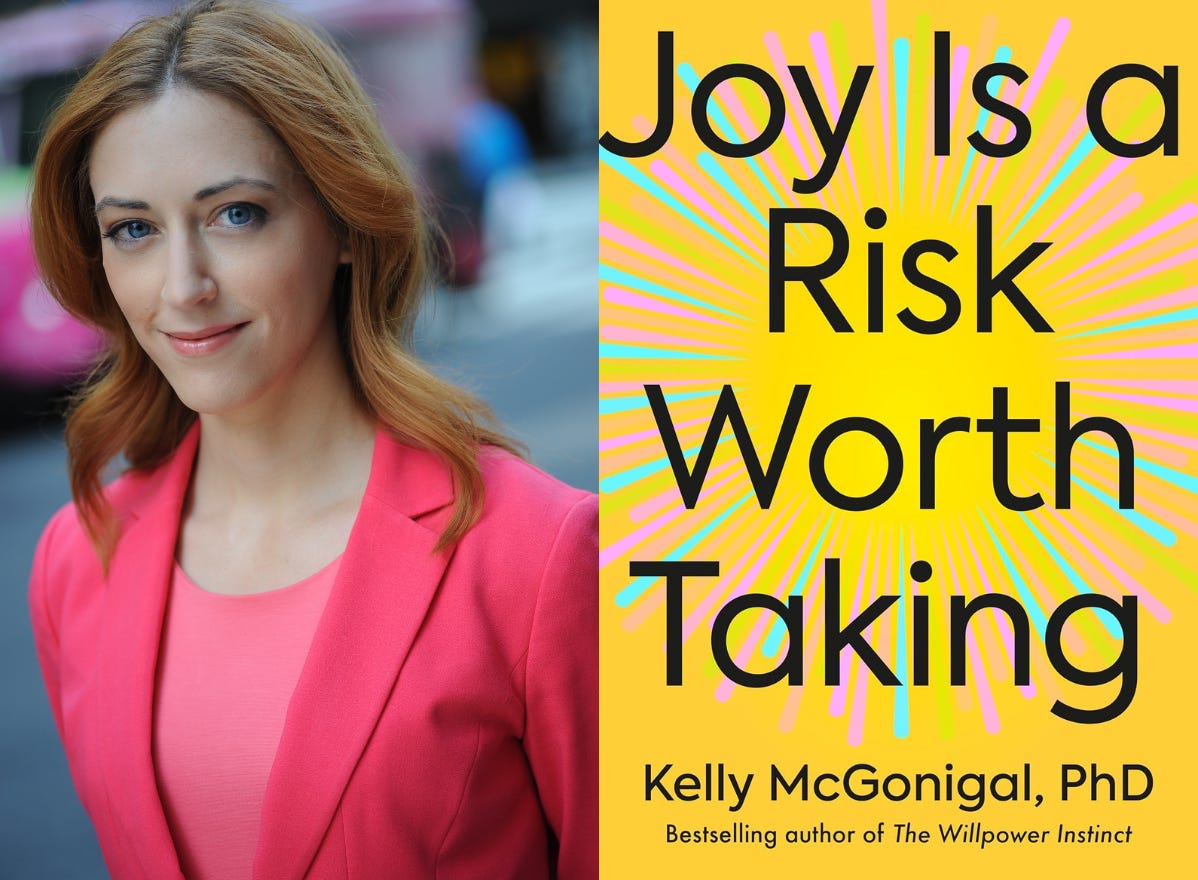
Kelly McGonigal is a psychologist, Stanford lecturer, and bestselling author whose books have explored willpower, stress, movement, and the ways psychological science can help us live better. She also has a demanding standard for when an idea is ready for a book—researching it, teaching it, living with it, and carrying it around in her head until she feels she has something worth saying.
Her new book, Joy Is a Risk Worth Taking, turns that attention to an emotion we often underestimate or even distrust. McGonigal argues that joy is not a luxury or an escape from difficulty, but a source of meaning, connection, and resilience, and that learning to let ourselves experience it can be an act of courage in its own right.
21 Questions with Kelly McGonigal
1. I couldn’t have written my latest book without…
Google Scholar. Any sentence in the book might have twenty or more studies behind it. Also, the hundreds of students from all over the world who took my online course The Science and Practice of Joy during the years I was writing the book. They helped shape it with their feedback, questions, and stories.
2. What’s the thing most people get wrong about being a writer?
People in my life are always surprised at how long it takes me to write a book (years). Writing words isn’t the rate-limiting factor. It’s the research, the interviews, the thinking, testing ideas through teaching, and living the topic long enough to have something worthwhile to say.
3. What’s the first thing you do after you finish a draft?
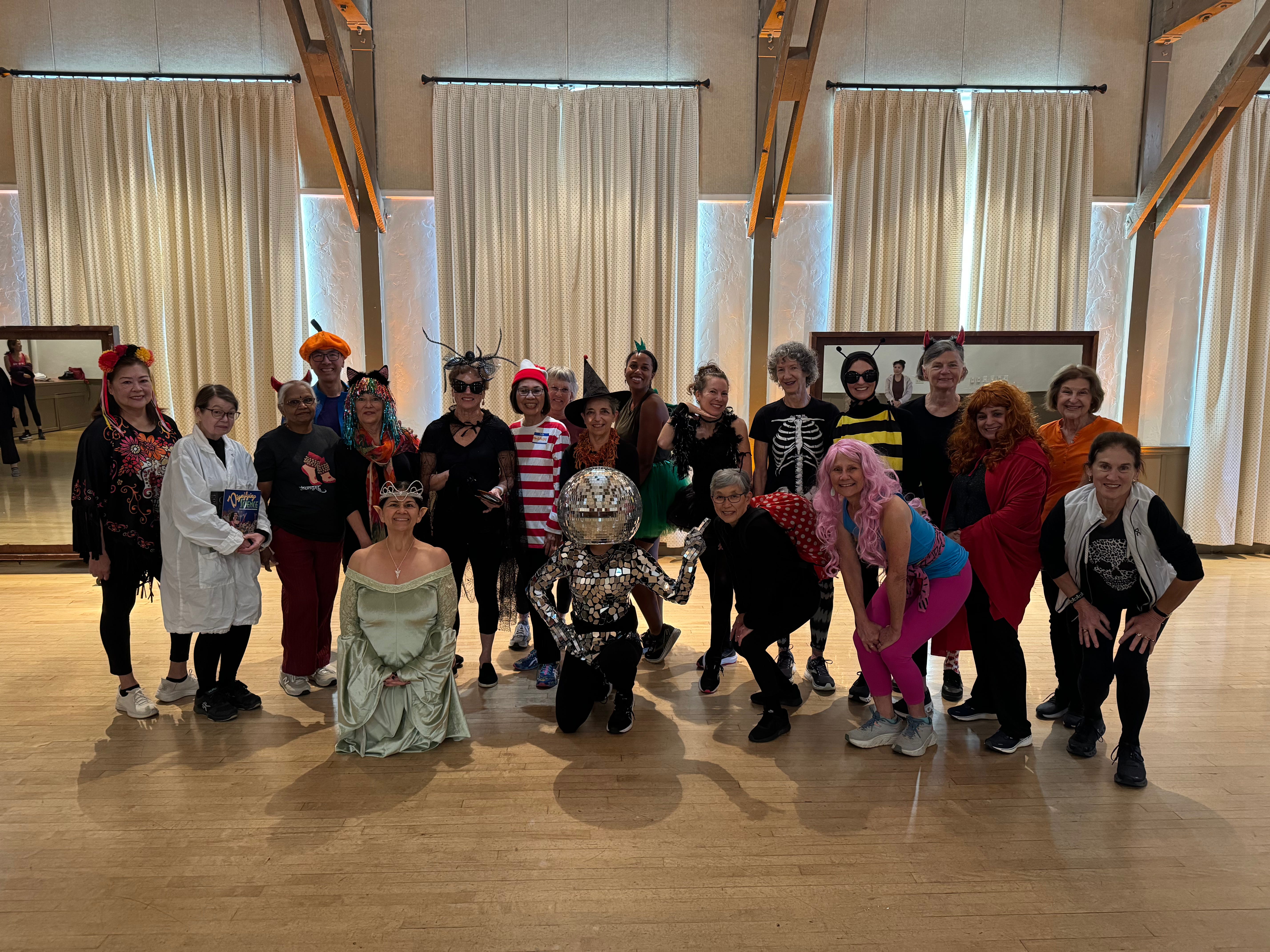
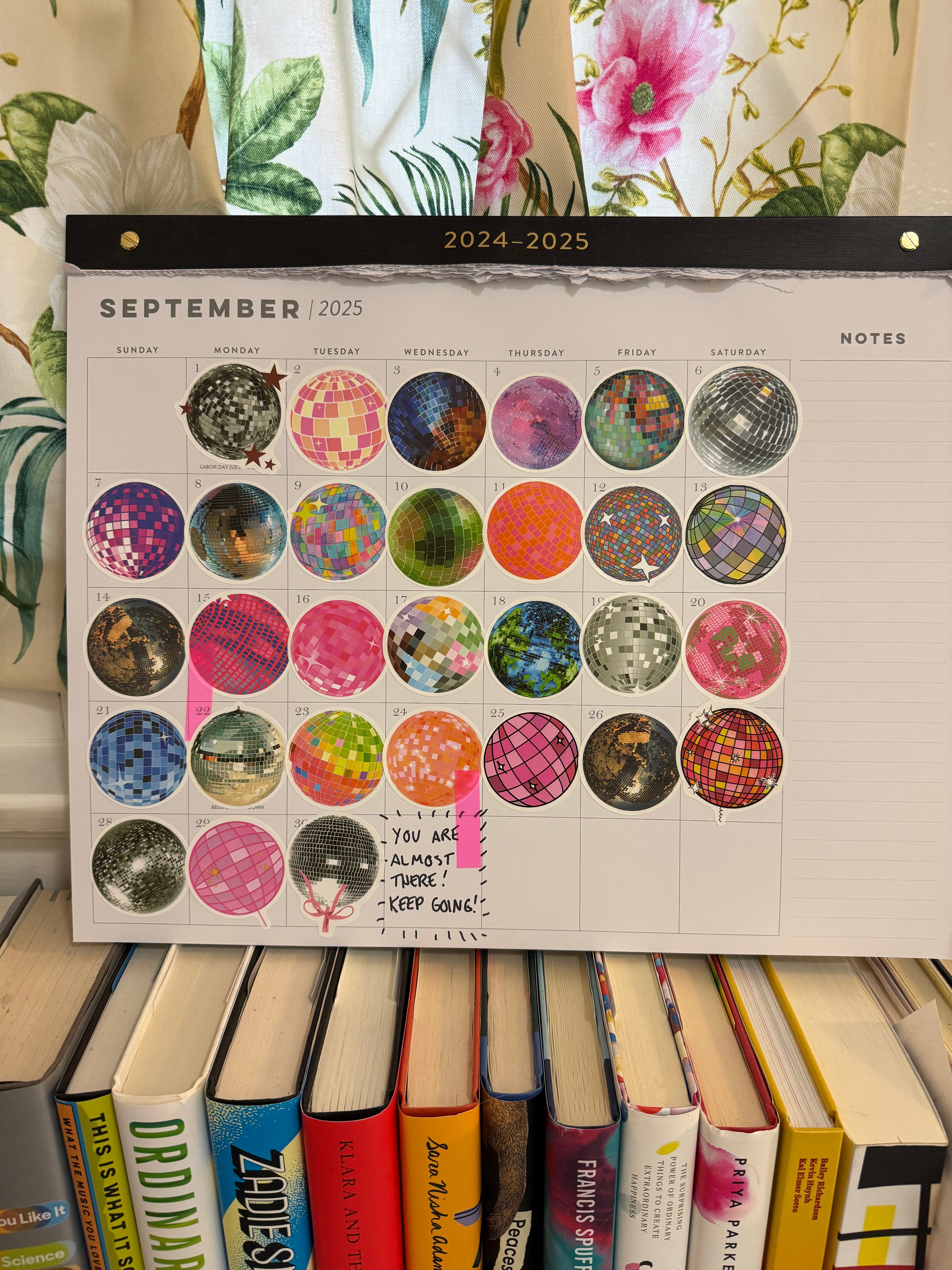
I tell people I submitted the manuscript in the hopes that someone will celebrate with me and acknowledge that it’s a big deal! When I submitted the revisions to my last book, my dance students—who had seen me discouraged about the book after missing multiple deadlines to deal with family crises—brought disco ball helium balloons to class. I deeply appreciated the gesture.
4. Do you read your reviews?
I avoid reviews on Amazon, Audible, and Goodreads. The most useful feedback I get is when people tell me how a book helped them. I also learn during book promotion what ideas people are most excited about, and what unanswered questions they have. I’m still giving interviews and talks about books that have been out for over a decade. What I say about those topics now is better because having the book out in the world taught me what people really want to know and need to hear.
5. What’s the best piece of professional advice you’ve ever received?
Over the past two decades, I’ve gotten the same feedback from editors, students, and readers. I am not as self-disclosing as they want, and they don’t feel like they really know me. It took me a long time to stretch into talking about myself and being more vulnerable in public. My latest book does this in a way I would have been uncomfortable with before. But it’s the first thing most people who have read the book comment on and thank me for.
6. Where do you find new ideas, and how do you keep track of them?
I’m most likely to get inspired by two types of information. 1) New scientific studies where there’s something quirky or ingenious about the methods that gets stuck in my mind. 2) Stories that I find moving. I’ve learned to trust the twist in my heart and gut I get from both of these sources. There’s a feeling to them and to their specificity that gets me thinking about the bigger theme or idea they reflect. I collect studies and stories like this, and my favorites often inspire chapter arcs and themes.
7. What’s something about you that people wouldn’t guess from your bio?
One trait I appreciate about myself is that I have managed to love whatever music has been popular (Billboard 100) consistently since the 1980s. Research shows that most people stop appreciating new pop music in their early twenties, but I’m riding this source of joy all the way to the end!
8. How did you find your agent?
I introduced myself to him at a conference held by the Northern California Science Writers Association at the UC-Berkeley Graduate School of Journalism. I told him I taught a popular course at Stanford on the science of willpower that had gotten a lot of media attention. He asked what the next three books I wanted to write were. I signed with him because he was thinking about me as a potential career author, not just a one-hit deal to broker.
9. What have you stopped doing that made you a better writer, or made the writing life better?
To finish my last book, I stopped paying attention to grievance- and outrage-driven social media, podcasts, and news platforms. That energy is the antithesis to the head space I need to be in to write with absolute sincerity, with the goal of helping people and highlighting the good in humanity.
10. What tech tools—including AI—do you use, and which ones do you actively ignore?
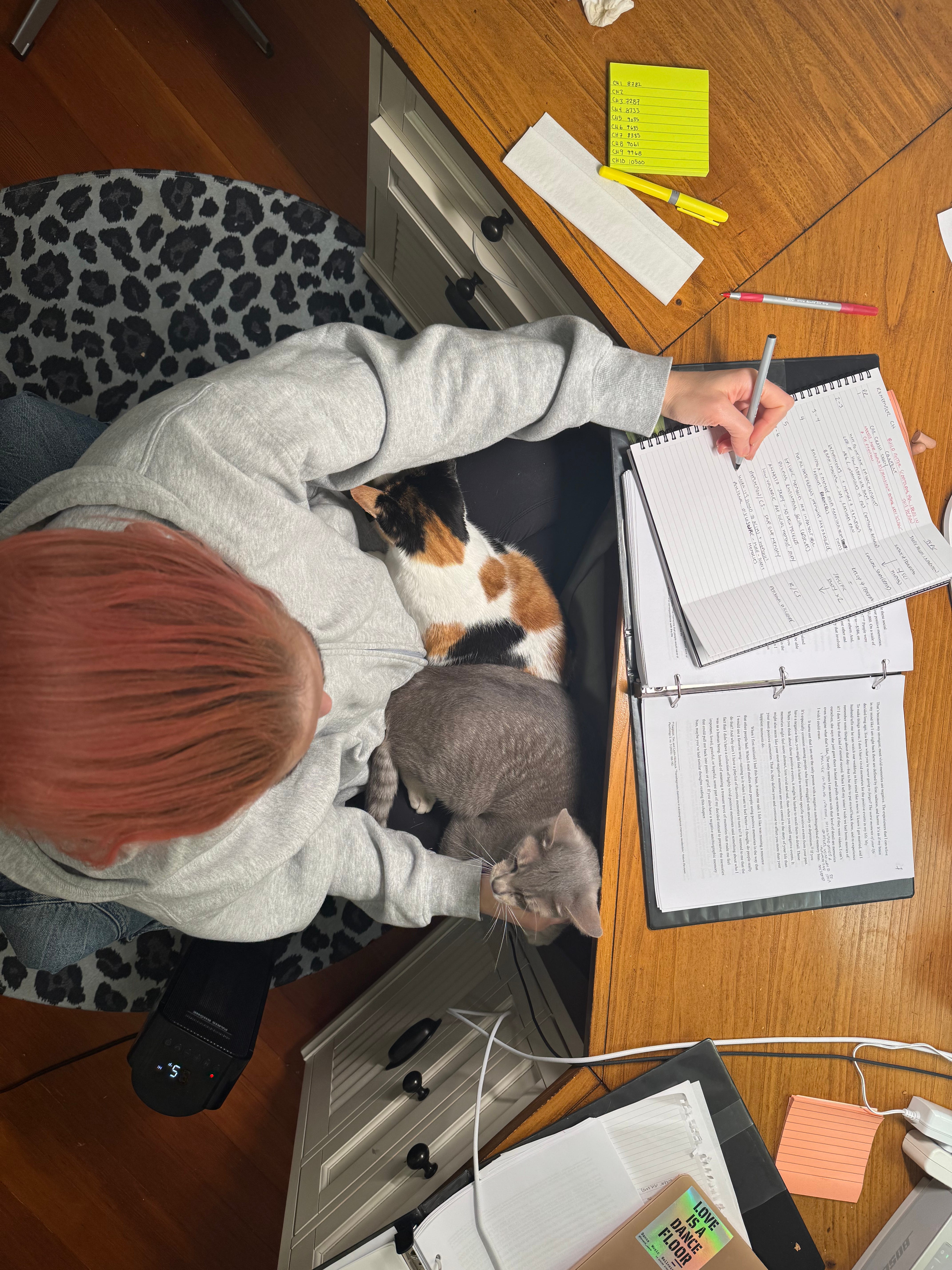
I still organize my thoughts with index cards, Post-it notes, and giant notepads. I use Zoom for interviews and refer to the video, audio, and transcripts for processing the conversation and fact-checking. AI has been useful for book promotion. For example, I’ll ask ChatGPT to review transcripts of a podcast I’m scheduled to go on and predict the kind of conversation the host will want to have.
11. What’s one thing you pay for that has been worth every penny to your writing career?
I hired a freelance editor, Connie Hale, to look at the early drafts of chapters when I wrote my first ‘big think’ psychology book in 2010. She helped me understand how to structure a chapter. She also line-edited some chapters for voice, which taught me how to do this myself. I also book my own travel for speaking and book promotion. I am willing to pay to make traveling less exhausting.
12. How many drafts do you typically go through before showing the manuscript to your editor?
By the time my manuscript is due to my editor, I’ve probably written and revised three times more material than I submit. That includes at least 100,000 words that have gone through multiple drafts and that nobody ever reads. As I get close to the deadline, I focus on the structure of the book and the organizing themes of each chapter (this comes last for me). Then I put in the material that belongs in that structure into each chapter, while still drafting new material. This is not efficient, but nothing else works for me.
13. Describe your ideal workday. How does it compare with your actual one?
If we’re really talking ideal, I would love to have a job that requires me to show up to the same place every day to produce something creative in collaboration with people I get to know over time. Working on a Broadway show or a radio program, for example. I’m still holding out hope I find myself in a situation like this someday. Almost nothing in my professional life works like this. Instead, I spend a lot of time thinking, creating, and preparing for classes or events by myself, and then delivering in a solo capacity. Most of my workday I am either alone, or I am the focus of other people’s attention, rather than one of many people contributing to a collective experience. Teaching dance classes at my local community center is my favorite professional activity because it comes closest to the feeling of showing up and co-creating something positive.
14. What’s your most common form of procrastination?
Working on choreography for my dance classes. This is an improvement over my previous preferred form of procrastination: Googling things I’m worried about.
15. What’s the best non-writing skill that’s helped your writing career?
Teaching scientific psychology courses. A special shout-out to my graduate school mentor James Gross at Stanford University, who modeled for me how to be incredibly thoughtful about teaching.
16. What’s the strangest or most unexpected response you’ve received from a reader?
One of my favorite emails arrived while I was on a flight. The email subject was “I read your book with my therapist and now I’m flying for the first time in 10 years!” I’ve worked hard to overcome a fear of flying, but I still hate being on a plane. I used to be embarrassed about this, but I used it as an example in The Upside of Stress. The reader wrote, “Your story about learning to fly touched me. I’m now practicing my flying with nerves, and I feel great knowing you’re also out there doing it.”
That email really summed up why I write books. I’m not afraid to say it, I write books because I want to change people’s lives. To get that message while I was literally ‘also out there doing it’ made me feel proud and grateful and braver.
17. What’s something you’ve changed your mind about recently?
I used to think I wouldn’t be good at handling the pain of getting a tattoo, so I never got one, even though I love them on other people. I got my first tattoo last April. It turns out that tattoo pain is not difficult compared to other forms of pain I’ve experienced. I now have four tattoos with plans for two more!
18. What are you unwilling to do to sell more books?
I was offered an obscene amount of money to film a show where I would be the psychology expert helping a famous movie star overcome his fear of heights by jumping out of an airplane. There was no scenario where that was going to happen.
19. If you could write one book in a totally different genre, what would it be?
A time-travel thriller with a tragic romance, with vibes similar to the Korean television dramas Signal and Tomorrow with You.
20. What’s something about the writing life that still surprises you?
How hard it is to spend so much time in my own head. I’ve written five nonfiction books, and I can’t seem to do it without isolating myself. I need to immerse myself to the point where I feel like I’m holding the whole book in my head, solving problems and figuring things out almost 24 hours a day. All those hours day after day sitting in a chair staring at a screen evaluating my own thoughts and worrying that I am not doing justice to the research or the stories people shared with me—it’s not great for my well-being. If I didn’t get emails like the one I mentioned above, I would not be an author.
21. What is your new book about?
Joy Is a Risk Worth Taking explores why seeking and sharing joy is an act of courage and compassion, especially when life is difficult. Grounded in psychological science, it provides strategies to create moments of meaning, connection, and celebration, as well as navigate common obstacles to joy, such as envy, guilt, anxiety, and grief. It is also an argument about human nature and why the things that bring us joy reflect the best in us.
You can learn more about Kelly’s book here: Joy Is a Risk Worth Taking
Author Insider is where writers get the real story of publishing.
You’ll find thoughtful conversations with industry insiders and bestselling authors, clear-eyed analysis of where the market is headed, and practical strategies for building a sustainable writing career. Whether you’re just starting out or several books in, the goal is the same: to help you make smarter decisions about your work.
If you’re new to Author Insider, here are a few reader favorites:
Until next time,
Panio
Author Insider is a reader-supported publication. Please consider becoming a free or paid subscriber.