
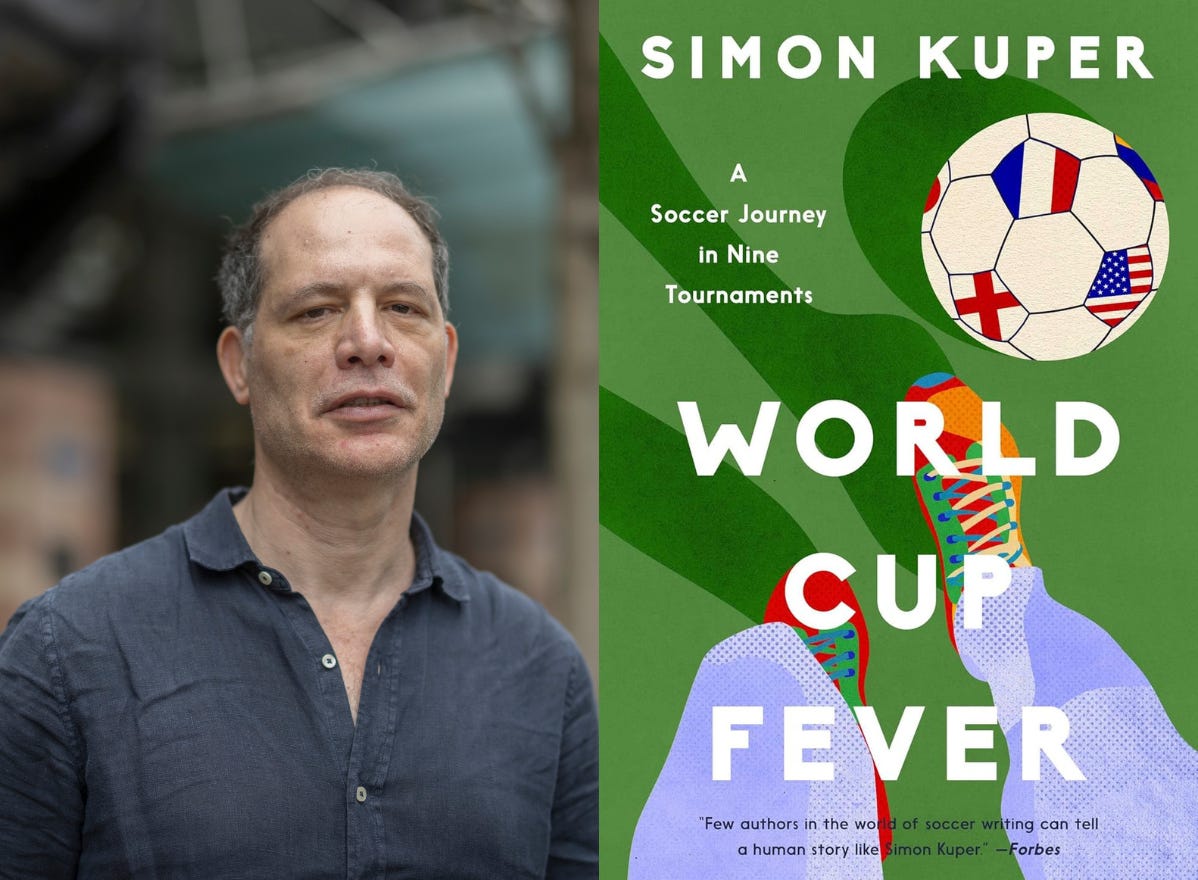
Over a decades-long career as a journalist and author, Simon Kuper has built a reputation for combining deep reporting with tight, unsentimental prose. His book, Soccernomics (co-authored by Stefan Szymanski), is considered a modern classic of sportswriting, hailed by the San Francisco Chronicle as “the most intelligent book ever written about soccer.”
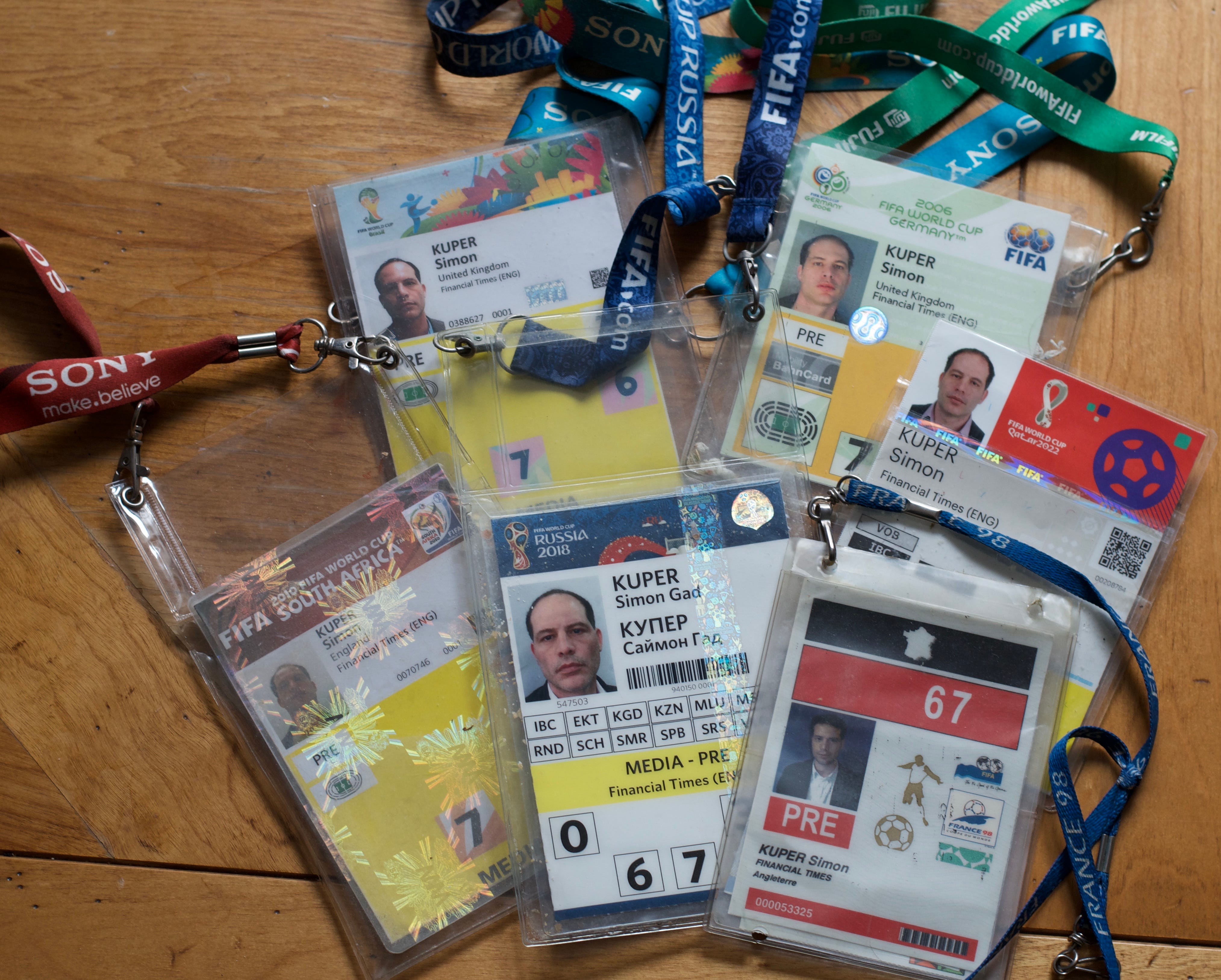
In his latest book, World Cup Fever, Simon returns to the soccer pitch, this time drawing on a rare vantage point: he has attended every men’s World Cup since 1990. The result is both a personal history of the tournament and a broader look at how soccer has evolved in the era of globalization.
Here, Kuper answers 21 questions about writing sentence by sentence, why most adjectives should go, and the discipline of listening.
21 Questions with Simon Kuper
1. I couldn’t have written my last book without…
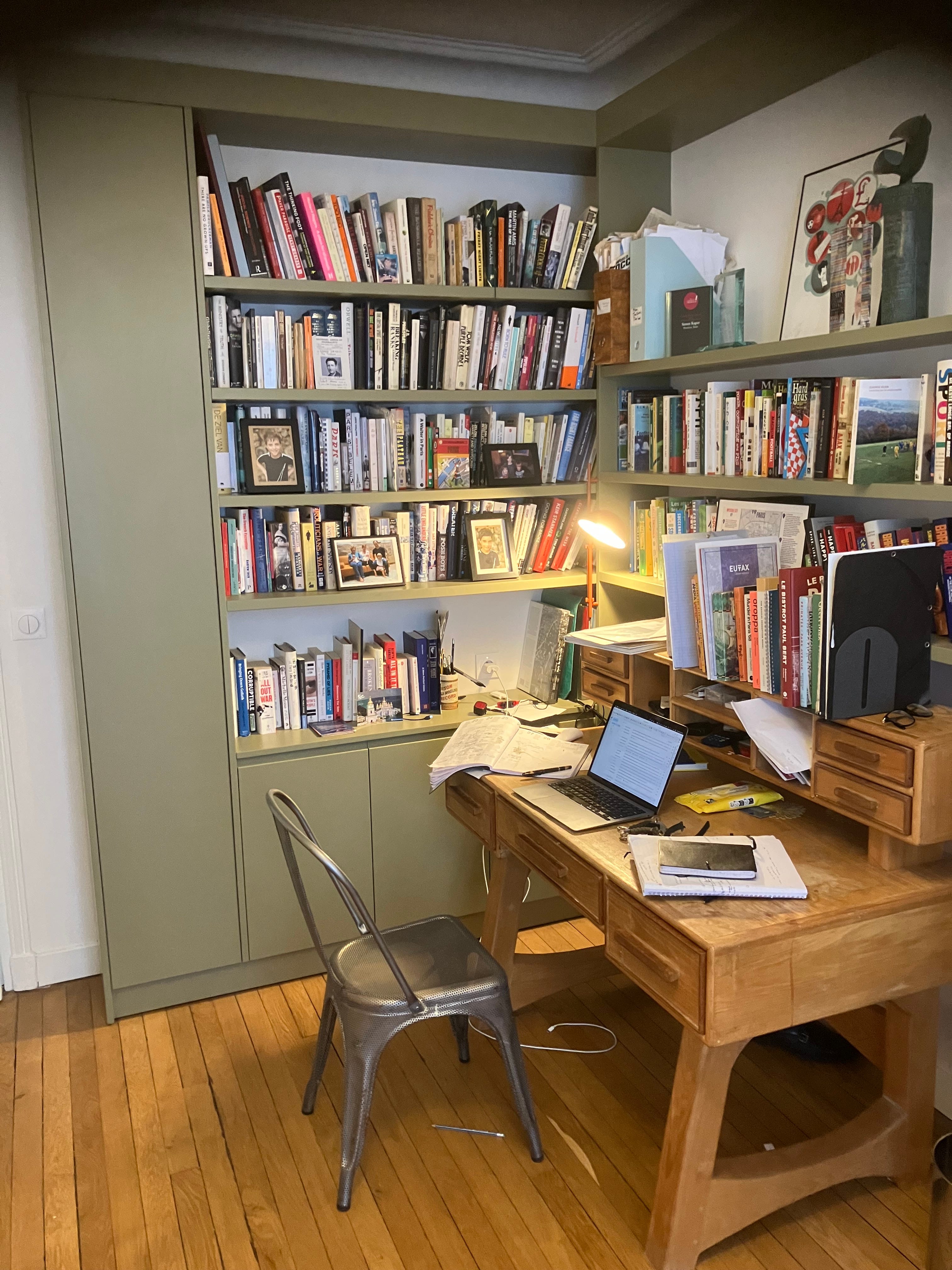
My office—a quiet place away from my family, a room of my own, to borrow from Virginia Woolf. It’s the thing that enabled me to write five books in the last five years. I’ve come to think that the workspace makes the author. Of course, this is an issue of economic inequality.
2. What’s the thing most people get wrong about being a writer?
That you sit staring at a blank page or screen, wondering what to write. In my case, at least, I plan out each chapter in enormous detail before I sit down to write. I make long plans in an A4 notebook showing pretty much where each sentence will go. When I sit down to write, I know almost exactly where I’m heading. The planning takes me longer than the writing.
3. What’s your most common form of procrastination?
Skimming mind-numbed through social media. Does anyone have any other way to procrastinate?
4. Do you read your reviews?
I have to admit I do. But I no longer take them as personally as when I began writing books more than 30 years ago. Now I’m sometimes less concerned with whether a review is positive or negative than where it’s insightful or not. I sort of value the insightful ones even when they hurt.
5. What’s the first thing you do after you finish a draft?
I immediately start editing it. I hunt for non-sequiturs, lack of clarity, unnecessary adjectives (and most are unnecessary), and sentences that don’t end with a crisp word or thought.
6. Kiss, marry, kill: podcasts, newsletters, and speaking gigs.
Kiss: podcasts. I really enjoyed doing my soccer podcast, Heroes & Humans, with the excellent Mehreen Khan, till the funding stopped.
Marry: speaking gigs, if paid.
Kill: newsletters. I always ask about a writing task: how many years or even weeks could the thing I’m working on last? I don’t read other people’s newsletters, and won’t be doing my own.
7. Where do you find new ideas, and how do you keep track of them?
In my office, I have a shelf of over 200 notebooks, dating back to 1998, in which I write down every thought or interview or observation I’ve ever considered using. Write it down at once or you’ll forget it. And index every notebook or you’ll never find it back.
8. What’s the best piece of professional advice you’ve ever received?
You have to attach your story to specific characters, those characters must come to life, and they must carry the reader all the way through the book, not just through occasional scenes. People care about characters. There isn’t a novel or movie without characters. But there are many nonfiction works with none or no compelling characters.
9. And the worst?
I react badly to suggestions that you should try to heighten writing with superlatives or colorful adjectives.
10. Whose career do you most admire and why?
Michael Lewis is the most successful nonfiction writer of our time. He has succeeded again and again in finding fascinating new topics, summoning the stamina to report on them for months or years on end, and then throwing away the overwhelming majority of his research to produce a tightly structured narrative.
11. What’s on your nightstand right now?
I’m reading a 500-page biography of a forgotten Dutchman called Jan-Willem Beijen, who was one of the handful of men who, after the war, created the European Economic Community- forerunner of today’s European Union. I’m planning a book on those guys. On the side, I’m reading Lord of the Flies, which I somehow missed as a child. It has yet to win me over, but maybe I’m too old for it.
12. How did you find your agent?
My first one disappeared. He had some kind of life crisis, and became uncontactable, abandoning me and all his other authors. He later resurfaced, but by then a publisher had connected me with Vivienne Schuster of Curtis Brown. When she retired, she passed me on to Gordon Wise, and I’ve been very happy with him these last 20 years.
13. What tech tools (AI included) do you actually use—and which ones do you actively ignore?
In the last few weeks, I’ve started using AI again, after mediocre initial experiences last year, and this time I’m very impressed. I can see the time coming when an author will have an idea for a book, tell AI which chapters to write, then prompt AI to improve them. The writer will still need to rewrite the book to put it in their own voice and do the fact-checking. In fact, maybe within five years, AI will have mastered voice and reliable fact-checking too.
14. What’s the best non-writing skill that’s helped your writing career?
Listening. From having been a loud young man who couldn’t listen, I’ve schooled myself to actually hear and be interested in what people say. It’s an essential tool for any writing about the world (as well as being the most appealing social skill). It’s the one piece of wisdom that I’ve tried to pass on to my children: learn to listen.
15. How many drafts before you show your editor?
I probably do about 15 rewrites of the average page. By the end, I’m usually hunting for just one stray word.
16. Can you describe your ideal workday?
I wake up at 7:30 am rested after a good night’s sleep. After a healthy breakfast at home, I’m in the office at 9 am. It’s a day when I have no journalism to do, no Zoom calls or personal administration or other nonsense, and I can just work on my next book. I work fully in the zone till 1:30 pm when I pop out for a quick, world-class, affordable two-course lunch in one of the restaurants within a 5-minute walk of my office. (This is only possible because I live in Paris.) Back to the office for a 28-minute post-meal nap, then work till 8 pm, when it’s home for dinner with family or friends.
17. How does that compare to your actual workday?
Much of this actually happens, except that I almost never have a good night’s sleep and therefore am rarely in the office before 10 am.
18. If you could write one book in a totally different genre than you usually do, which would it be?
It wouldn’t be a book, but I have sniffed around at the fringes of TV writing, and one day I’d like to co-write a TV or streamer script.
19. What’s something about the writing life that still surprises you?
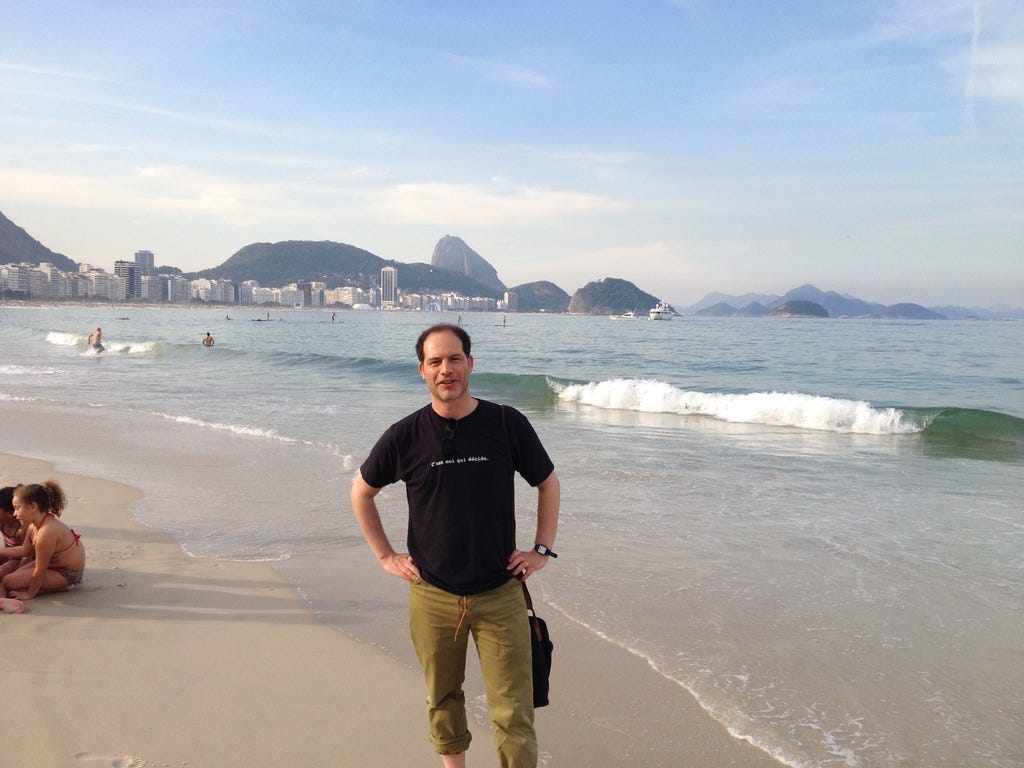
The enormous pleasure of meeting fellow authors. That’s a big reason why I go to festivals. You do the job alone, so it’s a joy to discuss it with people who are wrestling with the same issues, and good writers are ideal companions—original thinkers who are interested in people.
20. What is your new book about?
World Cup Fever recounts my journeys to the last nine men’s soccer World Cups—every one since 1990—and adds some history and reflections on what the tournament is all about. Call it a personal look at a global phenomenon. It’s timed for this summer’s World Cup in the US, Mexico, and Canada.
21. Anything you’d like to ask or crowdsource from fellow authors in the Author Insider community?
How do you use AI in your writing, if at all? (I guess this applies chiefly to nonfiction writers.) What advice do you have on this?
More from Author Insider
Author Insider is where writers get the real story of publishing—thoughtful conversations with bestselling authors and industry insiders, clear-eyed analysis of where the market is headed, and practical strategies for building a sustainable writing career. Whether you’re just starting out or several books in, the goal is the same: helping you make smarter decisions about your work.
If you’re new to Author Insider, here are a few reader favorites:
Until next time,
Panio Gianopoulos
Editorial Director, Author Insider & The Next Big Idea Club